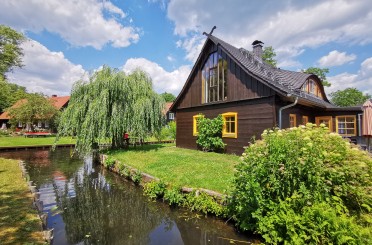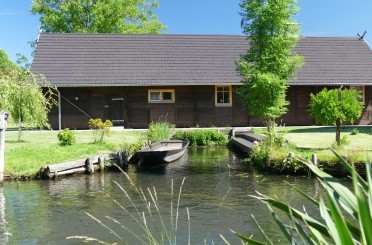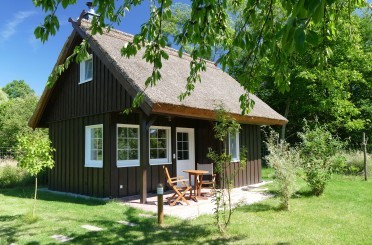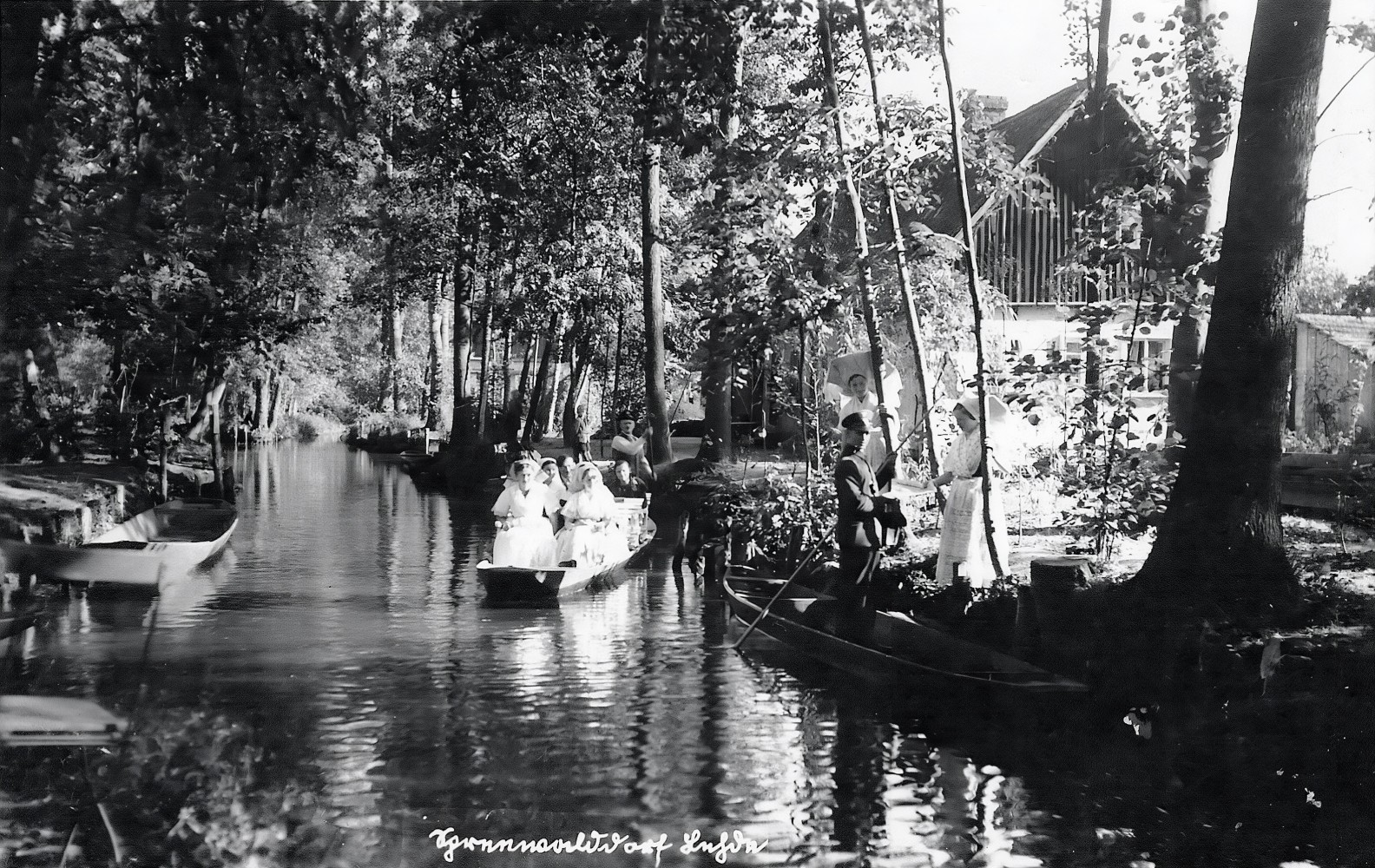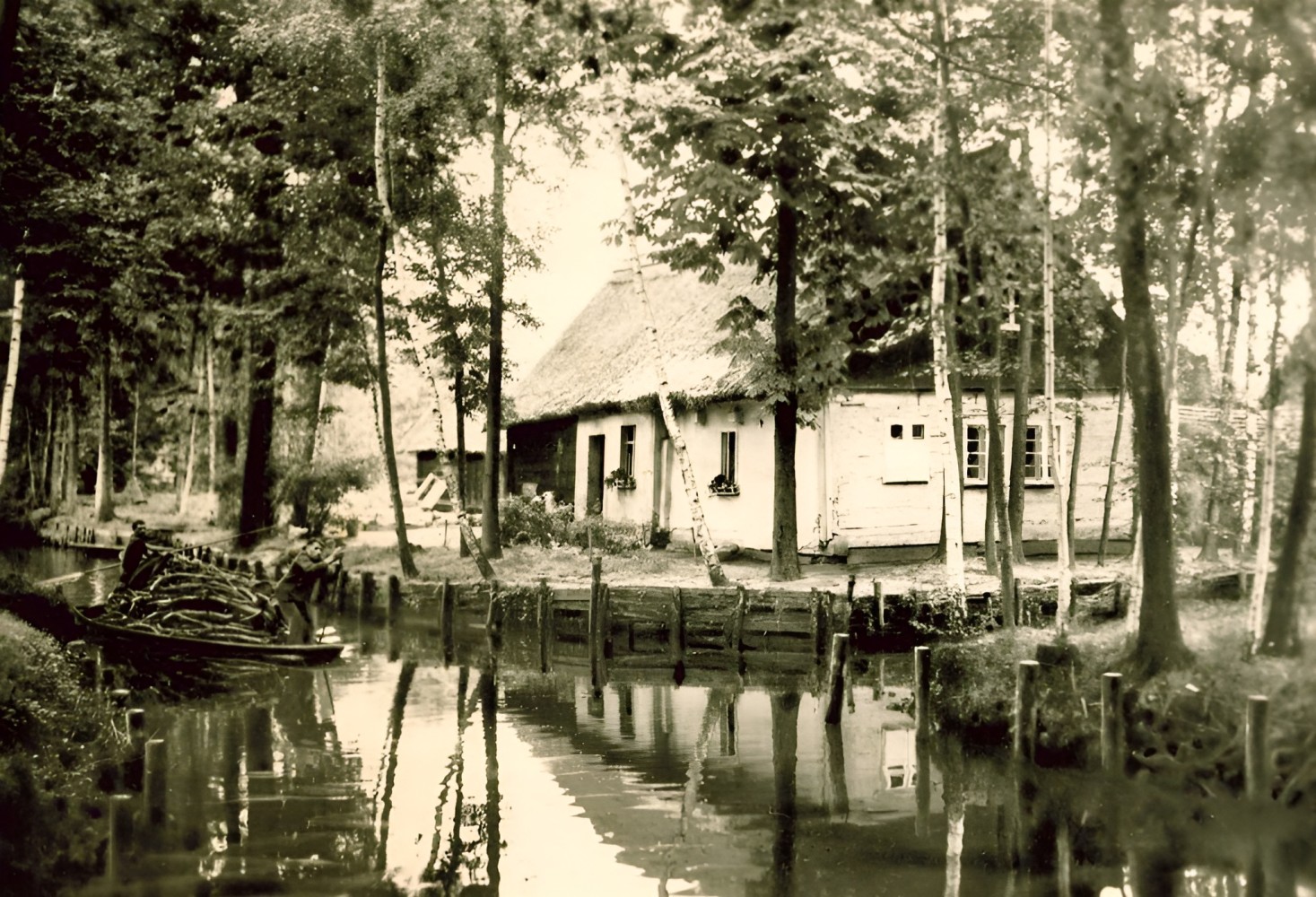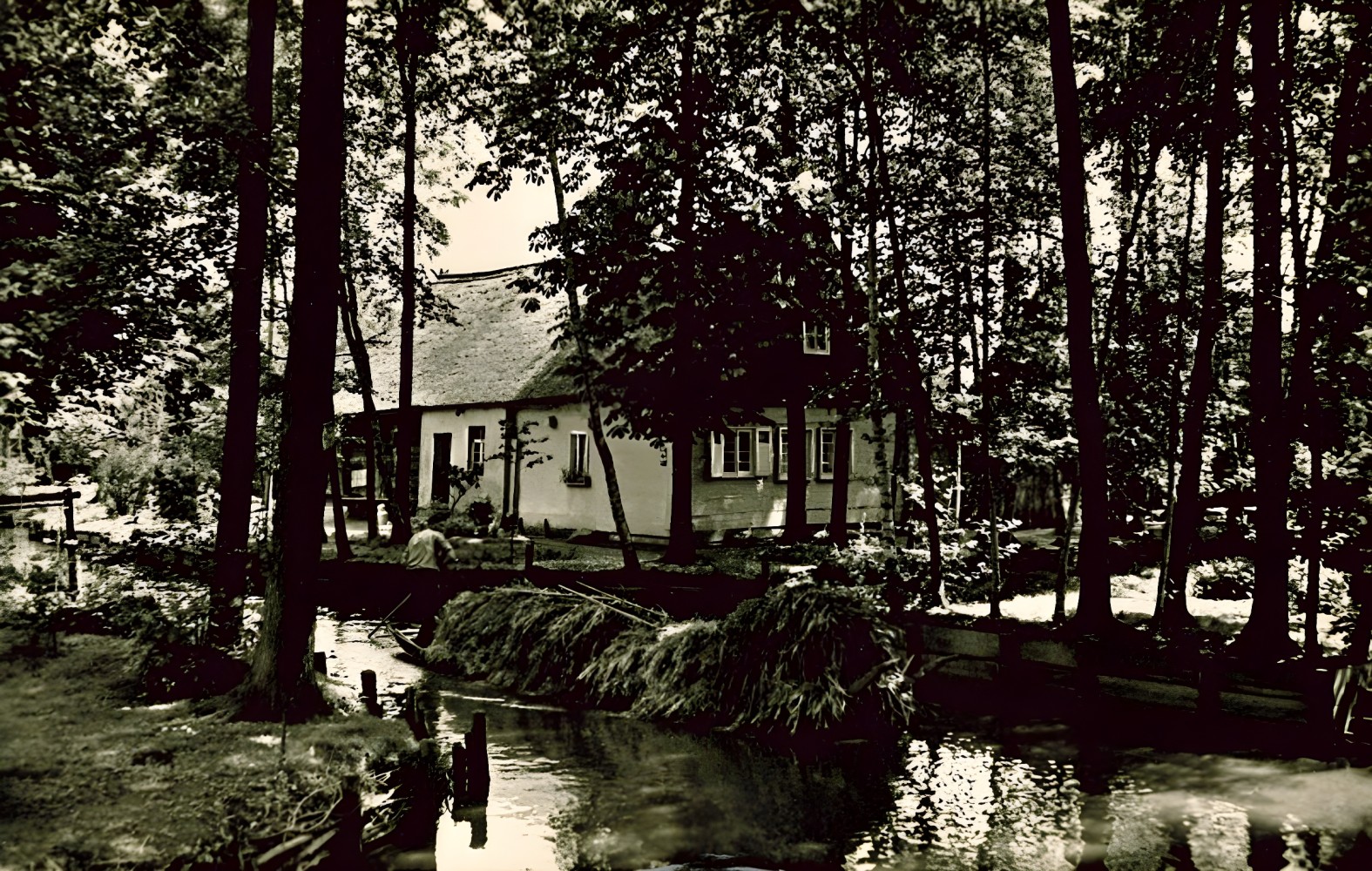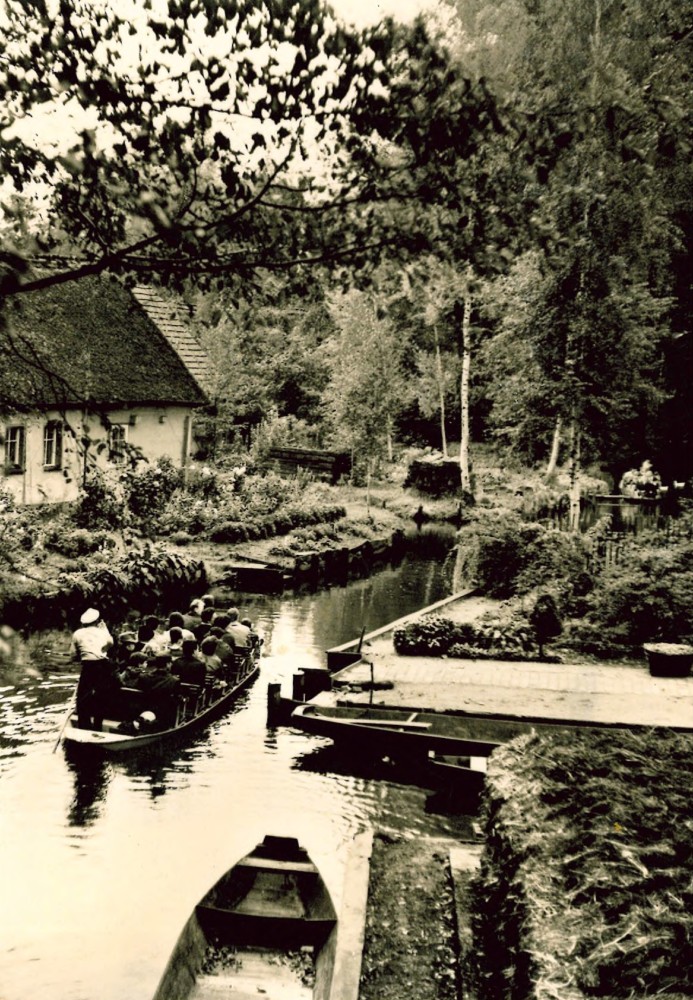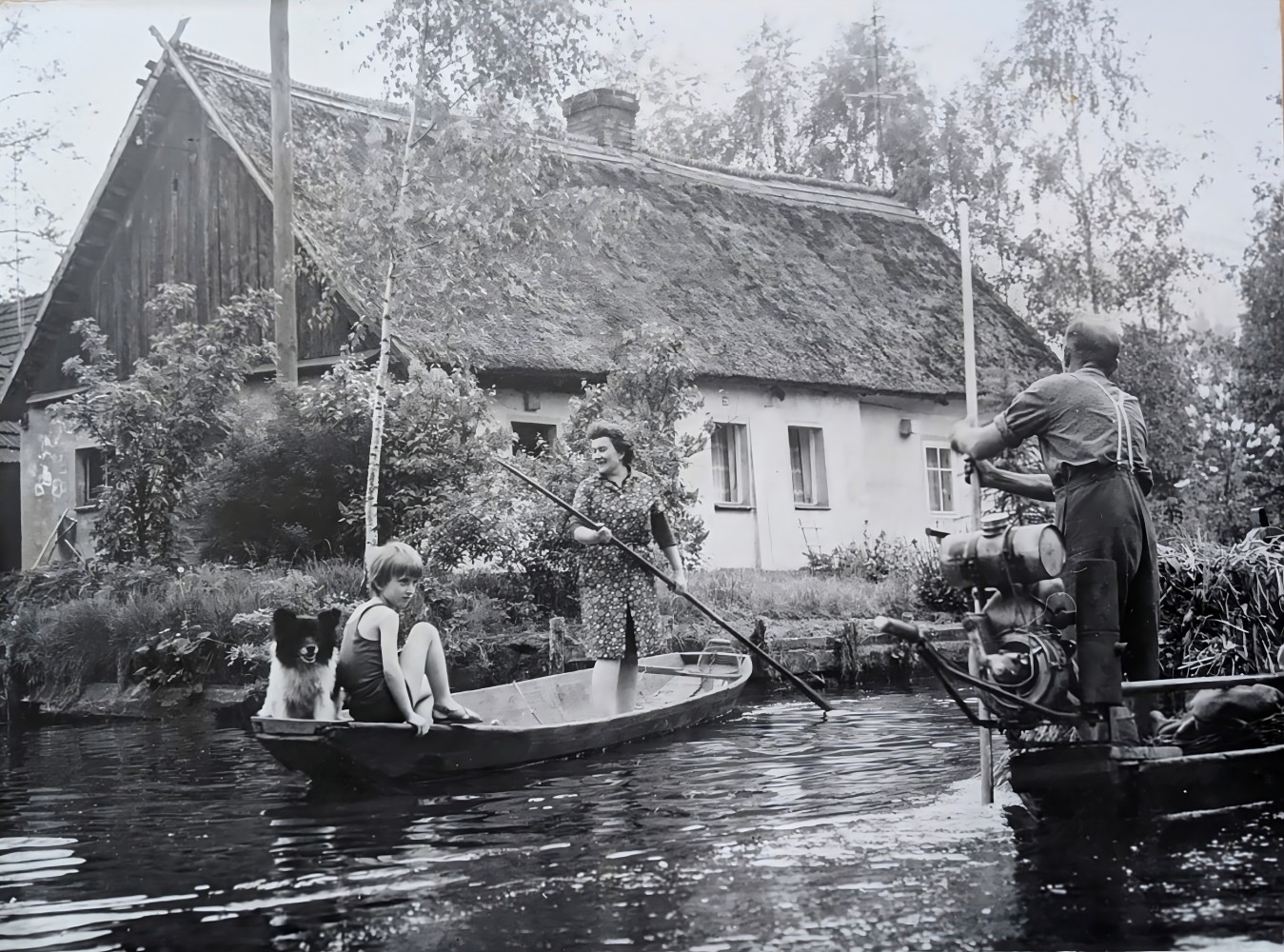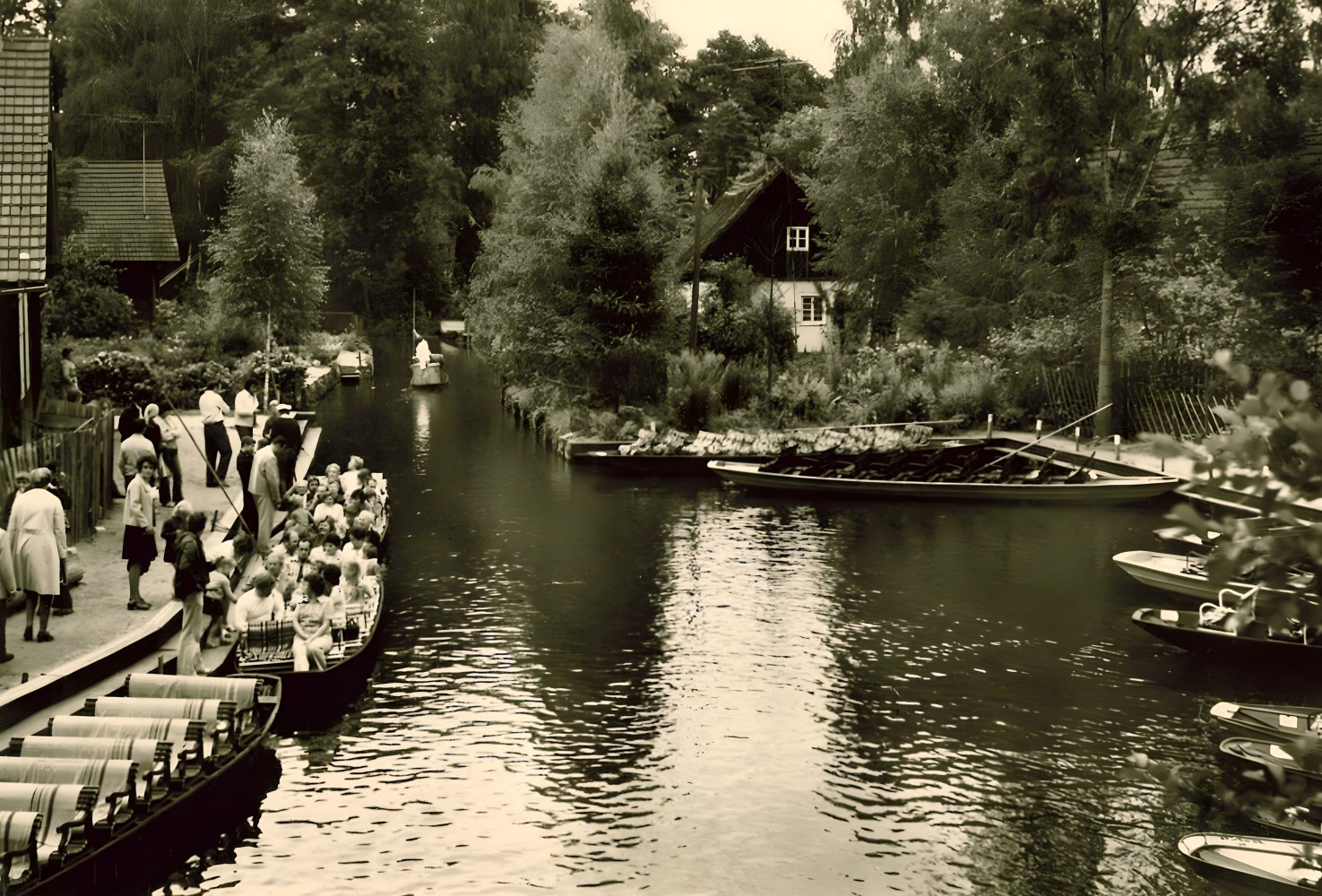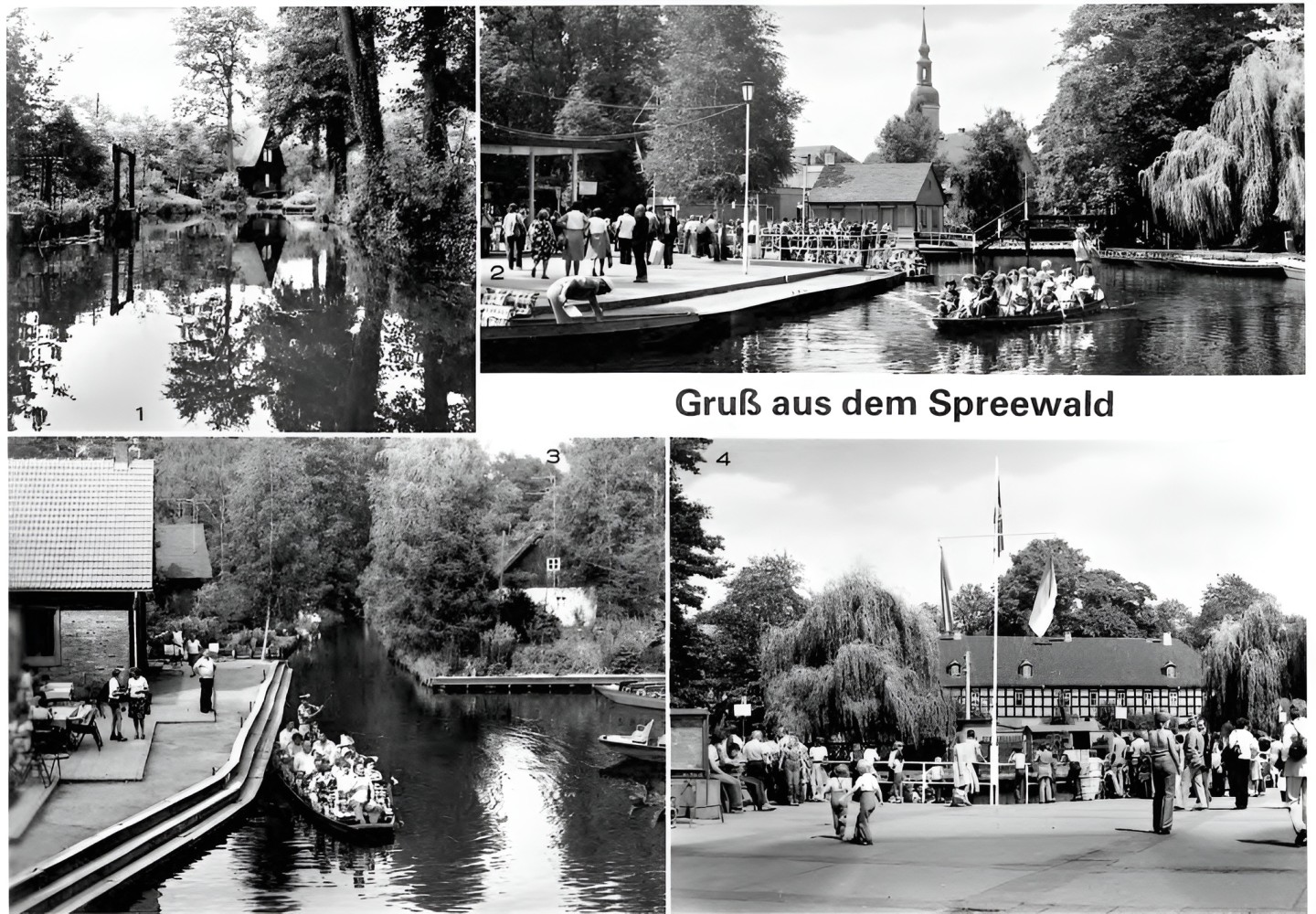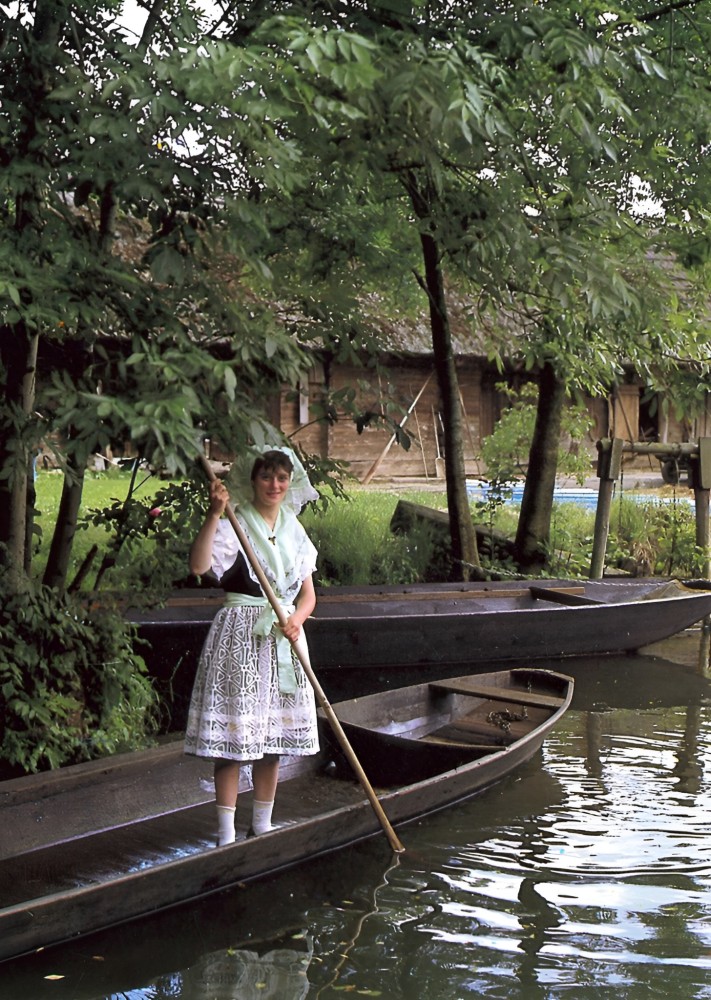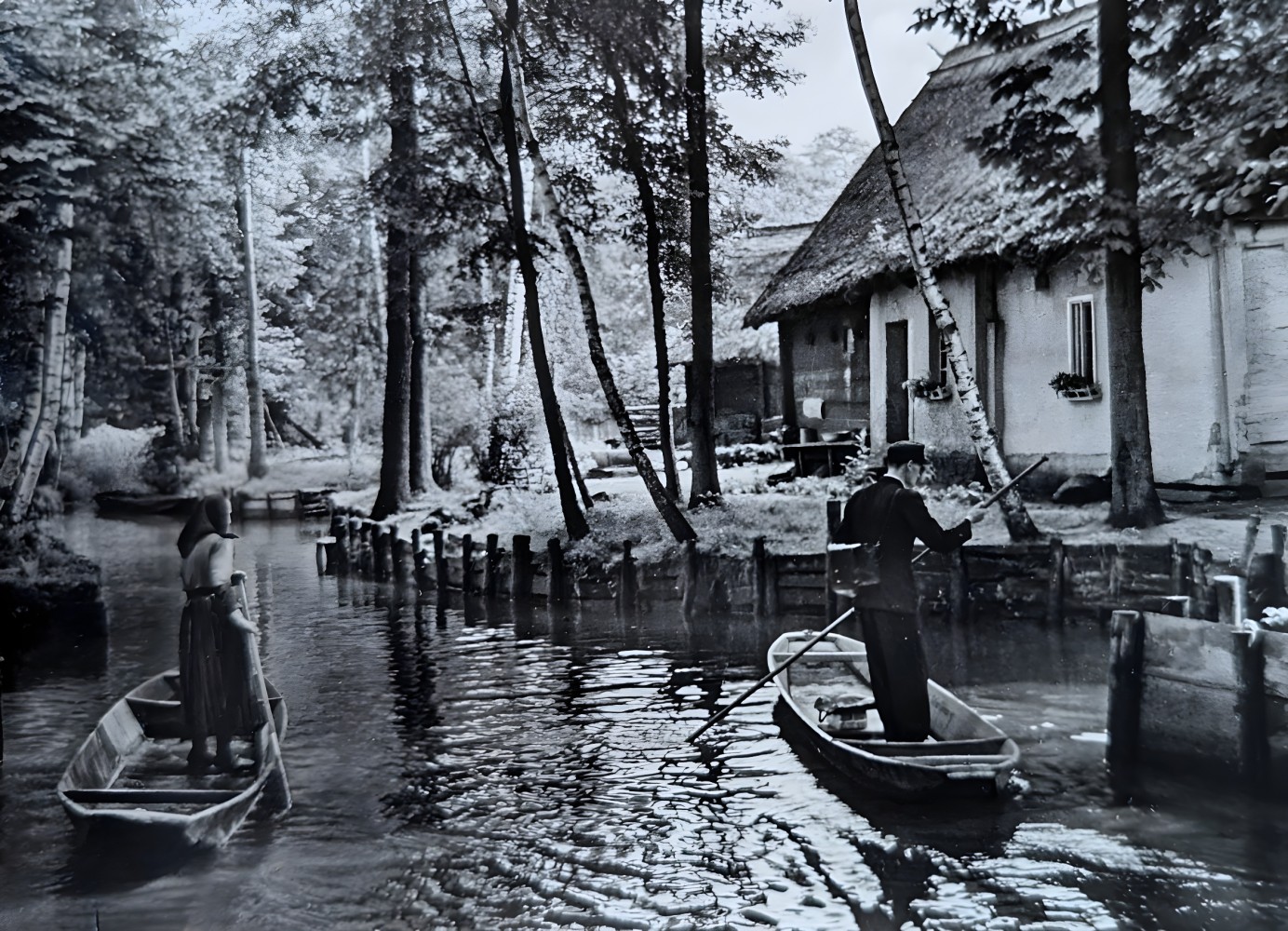
Some places tell their own story. The plot An der Dolzke in Lehde is one such place. Anyone arriving here – on foot, by bike or by punt across the Lehder Graben, as generations before them did – can feel that this ensemble of residential house, barn and small outbuildings is not from yesterday.
Which it is not. The plot has been developed since 1750. What has been preserved here over centuries is rare enough today to be protected by the state of Brandenburg – and rare enough to keep drawing painters, photographers and publishers back to this spot, even during the days of the Iron Curtain.
The paintings
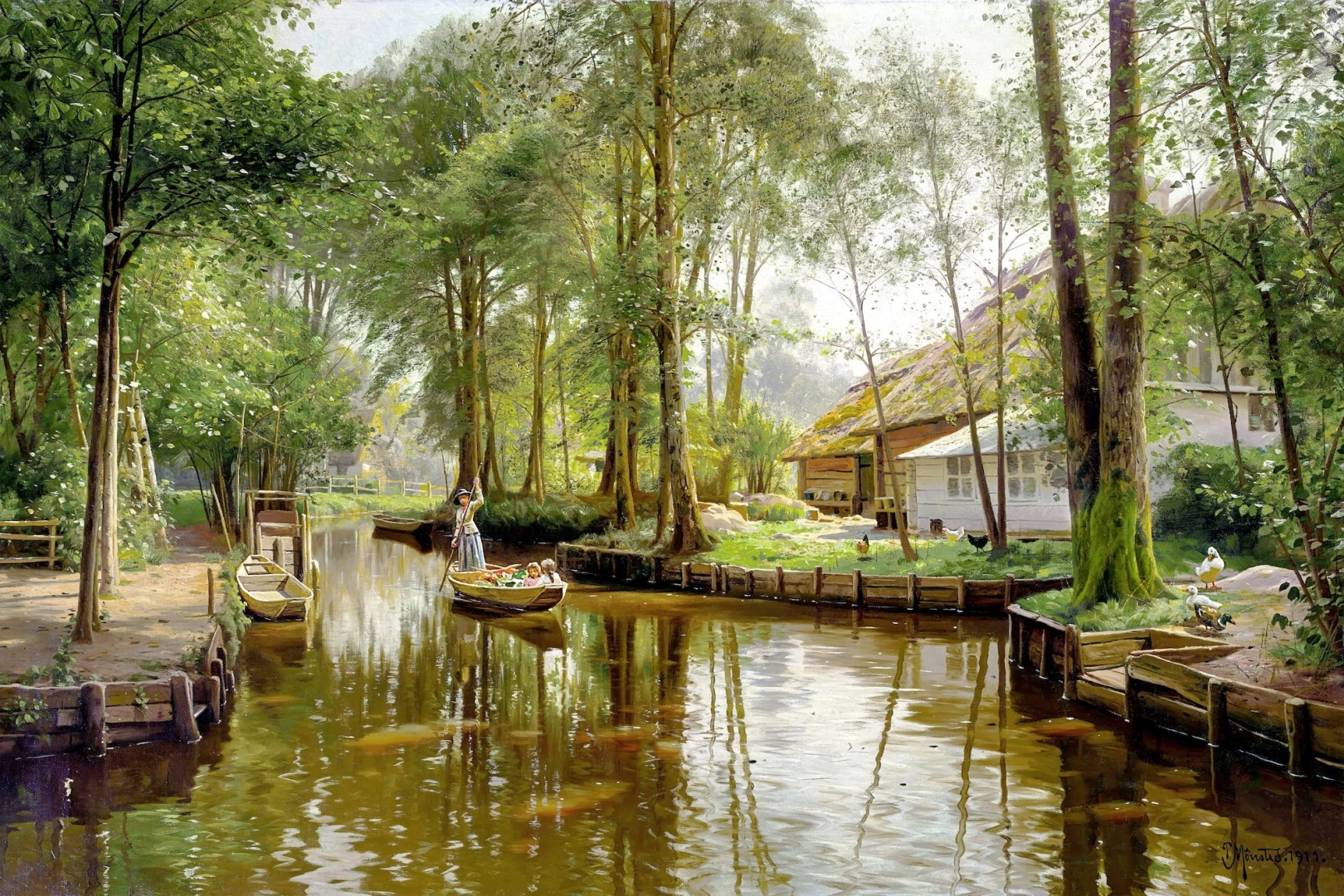
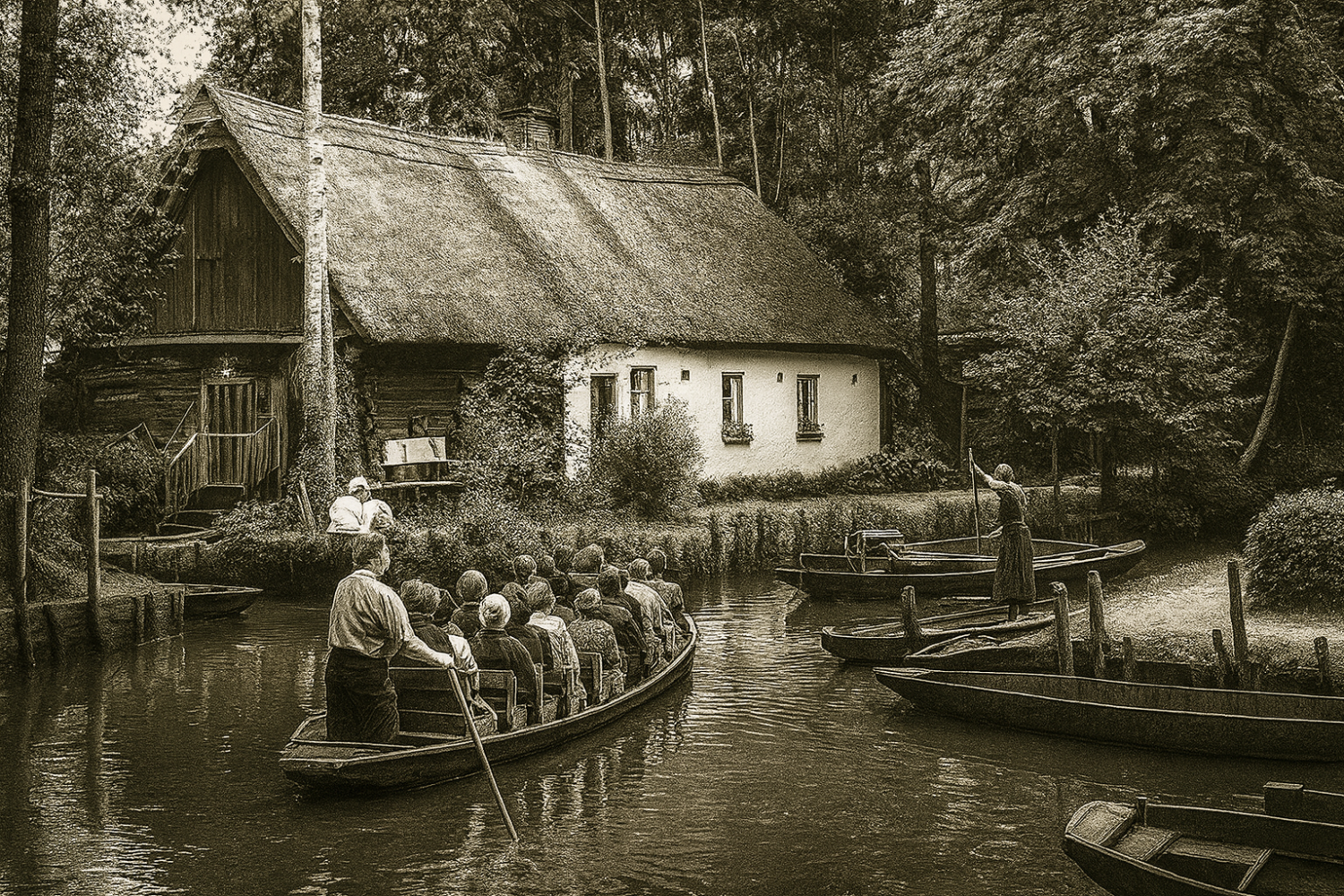
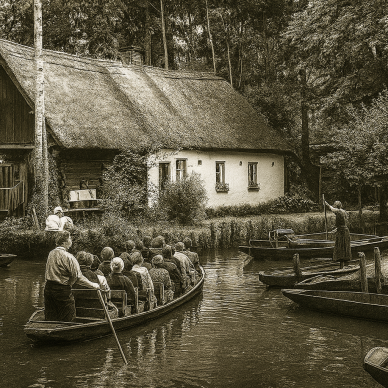
The Danish landscape painter Peder Mørk Mønsted (1859–1941) was one of the most important realists of his era. He travelled Europe, North Africa and the Middle East – and visited the Spreewald several times between 1909 and 1921. He demonstrably painted in Lehde; signed works bear the addendum "Lehde 1913". His painting Going to Market (1911) shows the plot at An der Dolzke from the so-called painter's viewpoint in Lehde – the vantage point from which the waterways and old cottages could be seen to particularly impressive effect.
The Berlin painter Bruno Moras (1883–1939), son of the well-known landscape painter Walter Moras, also chose the estate as a motif. His work View into the Spreewald shows the ensemble in the lighting typical of that period.
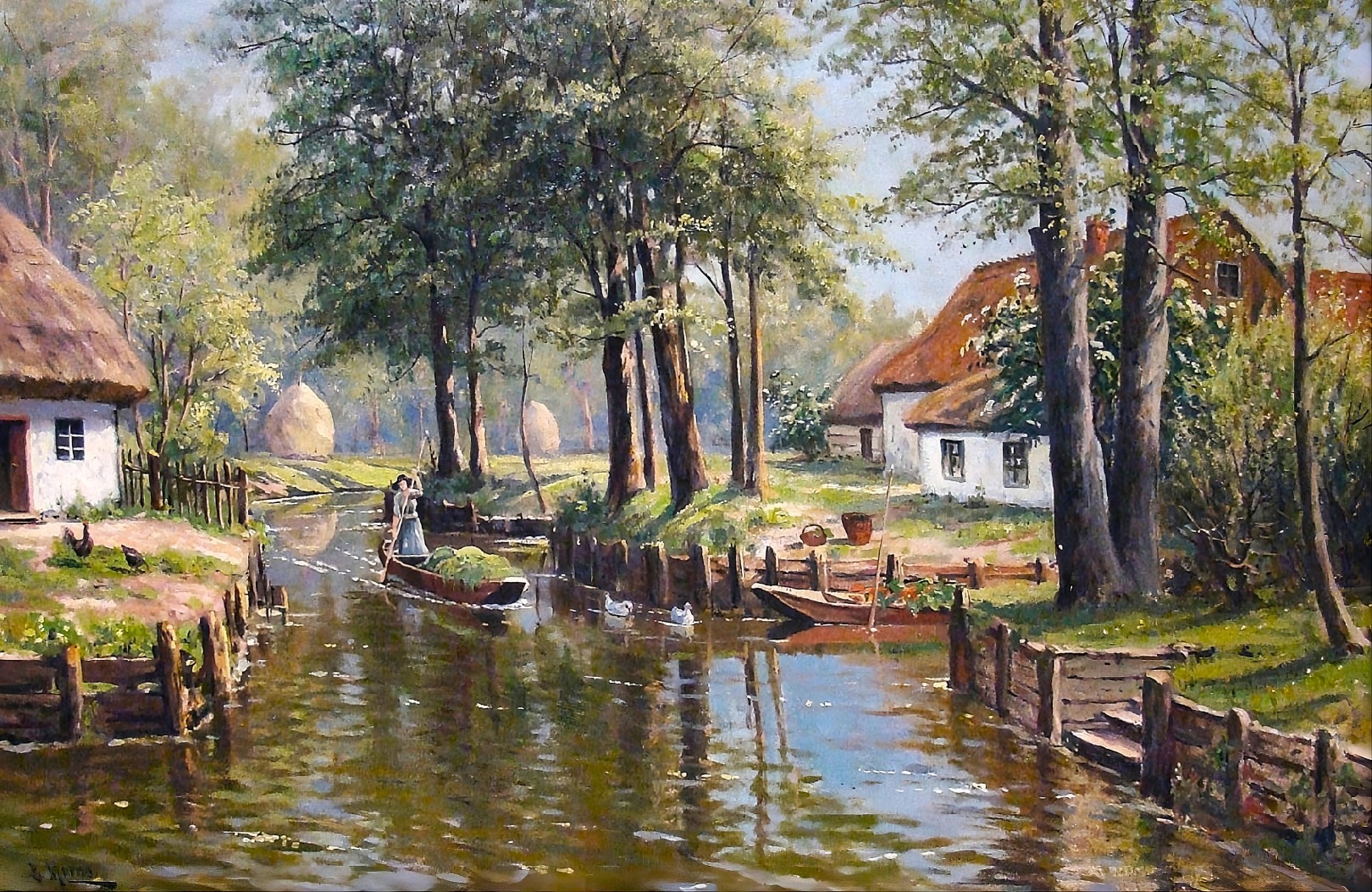
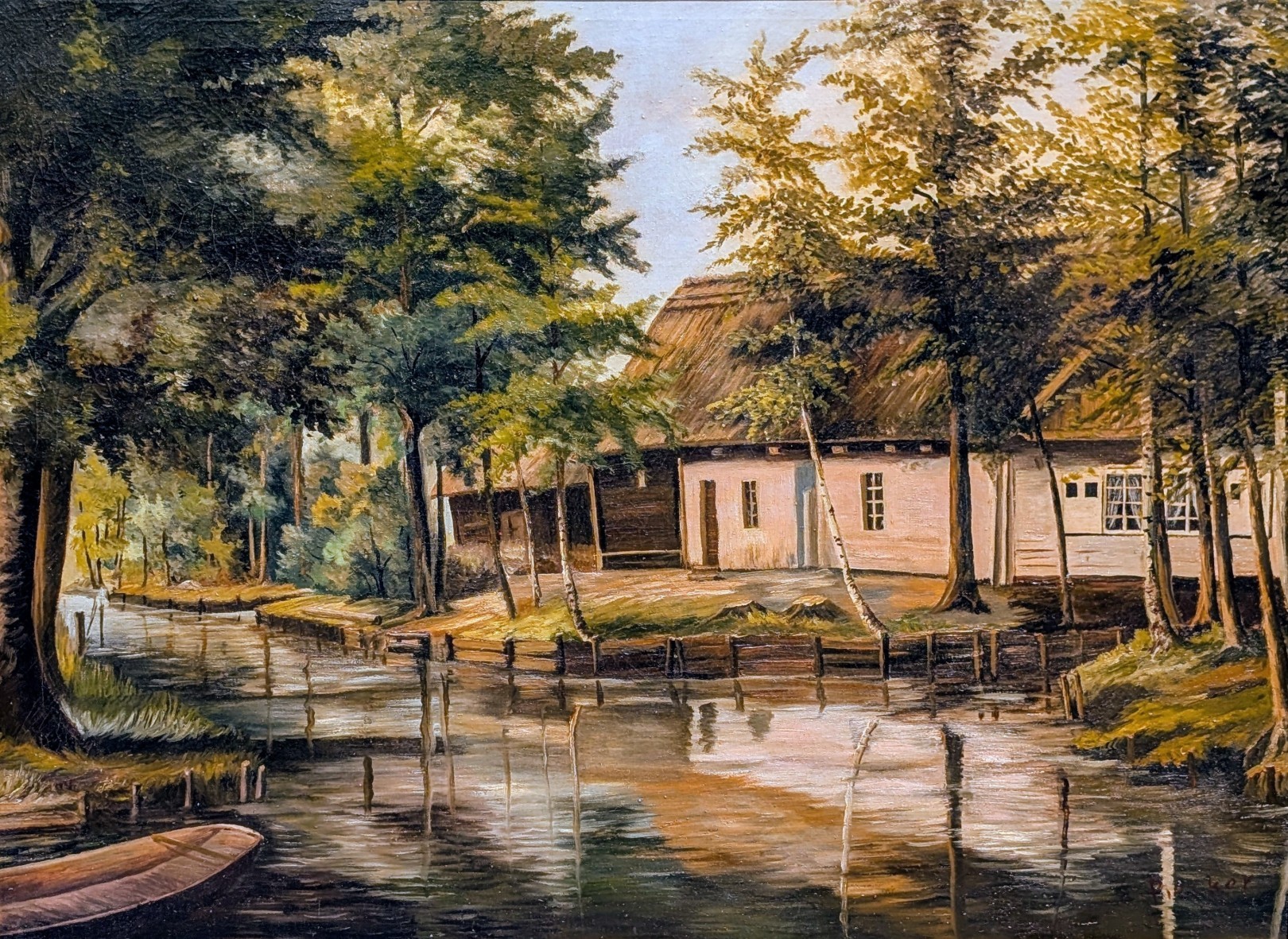
A third painting shows the plot from a slightly different, closer perspective. The painter is not known; the work is undated. It is one of the few painted testimonies that probably dates from the first decades of the previous century.
The postcards
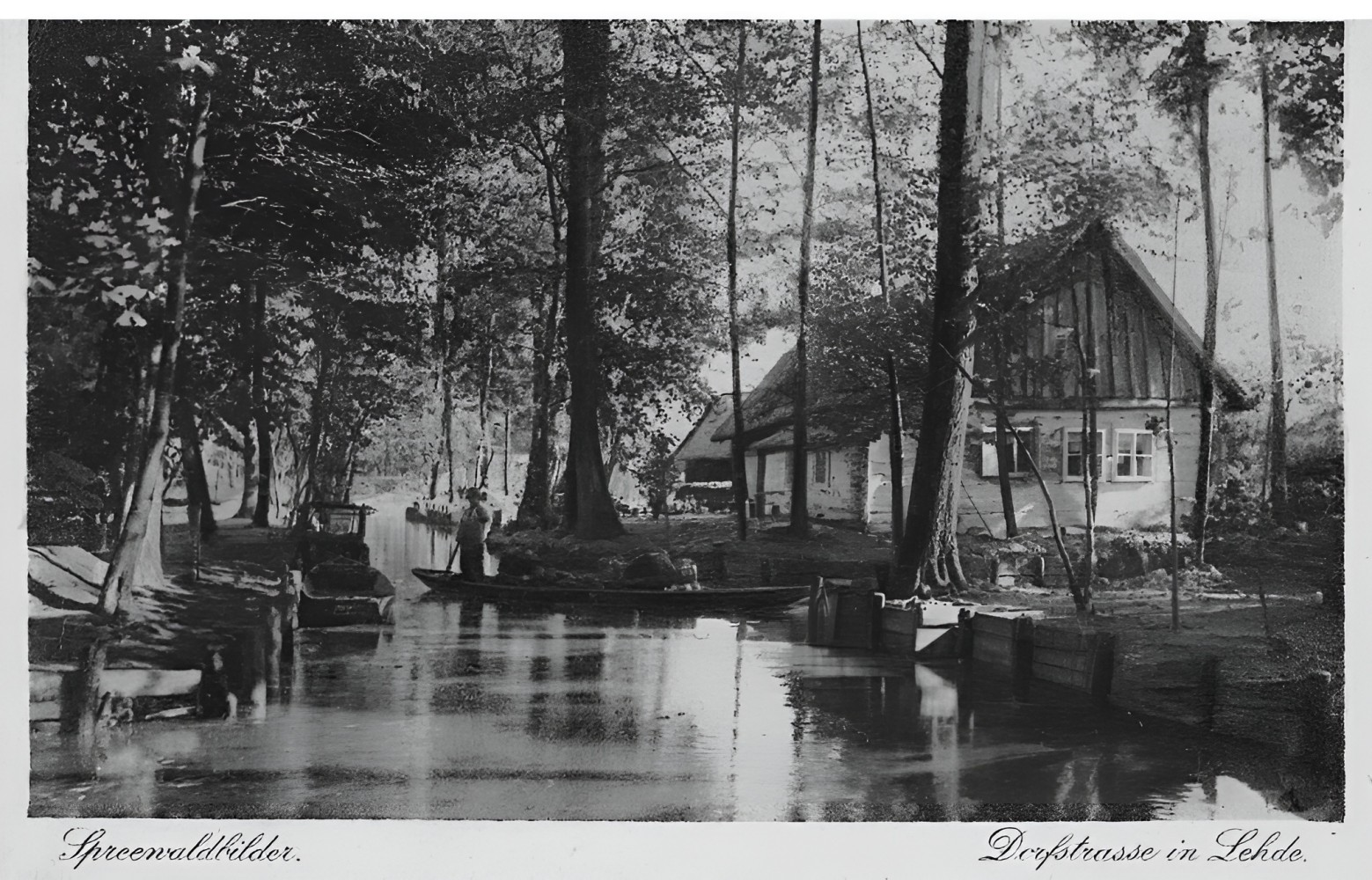
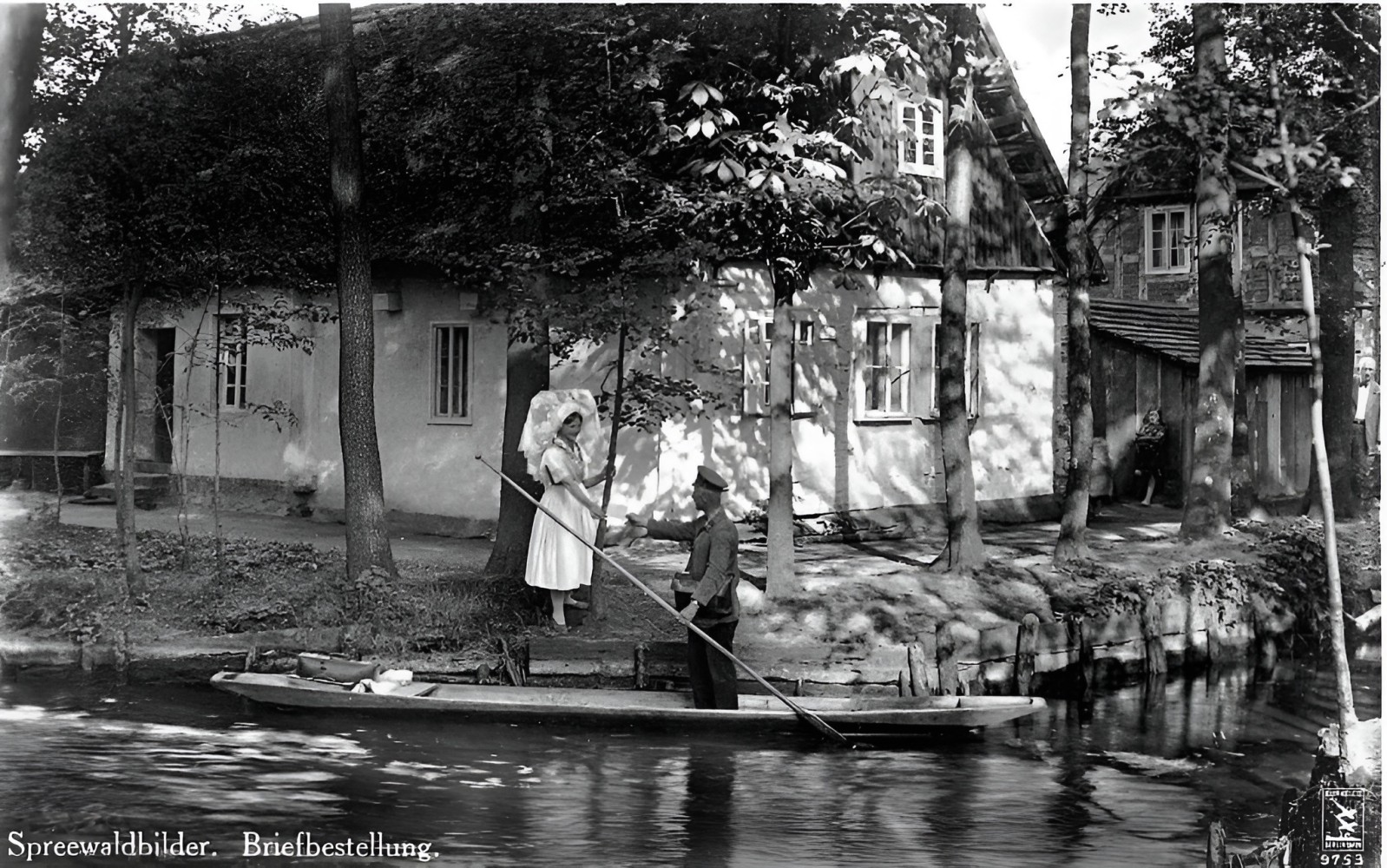
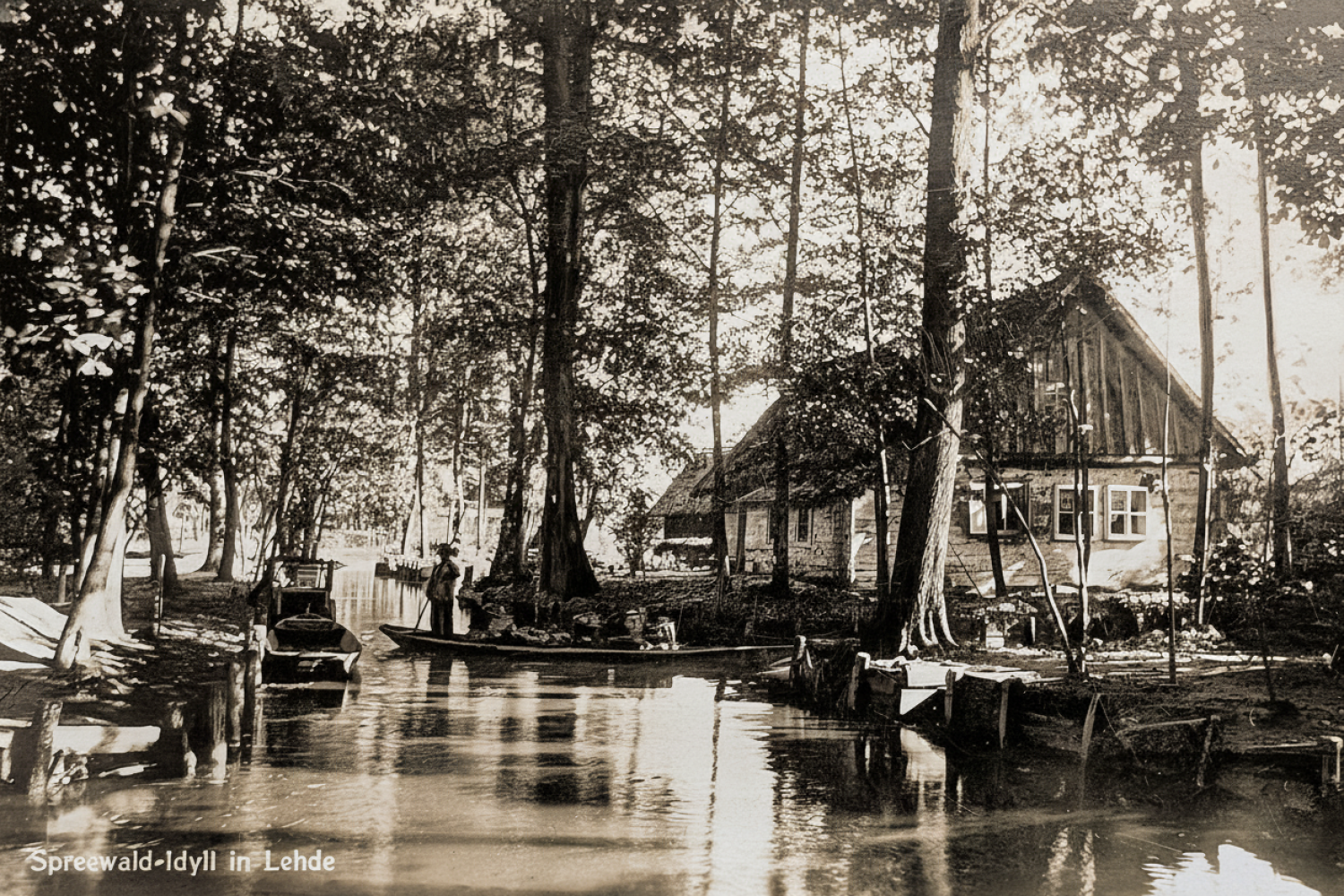
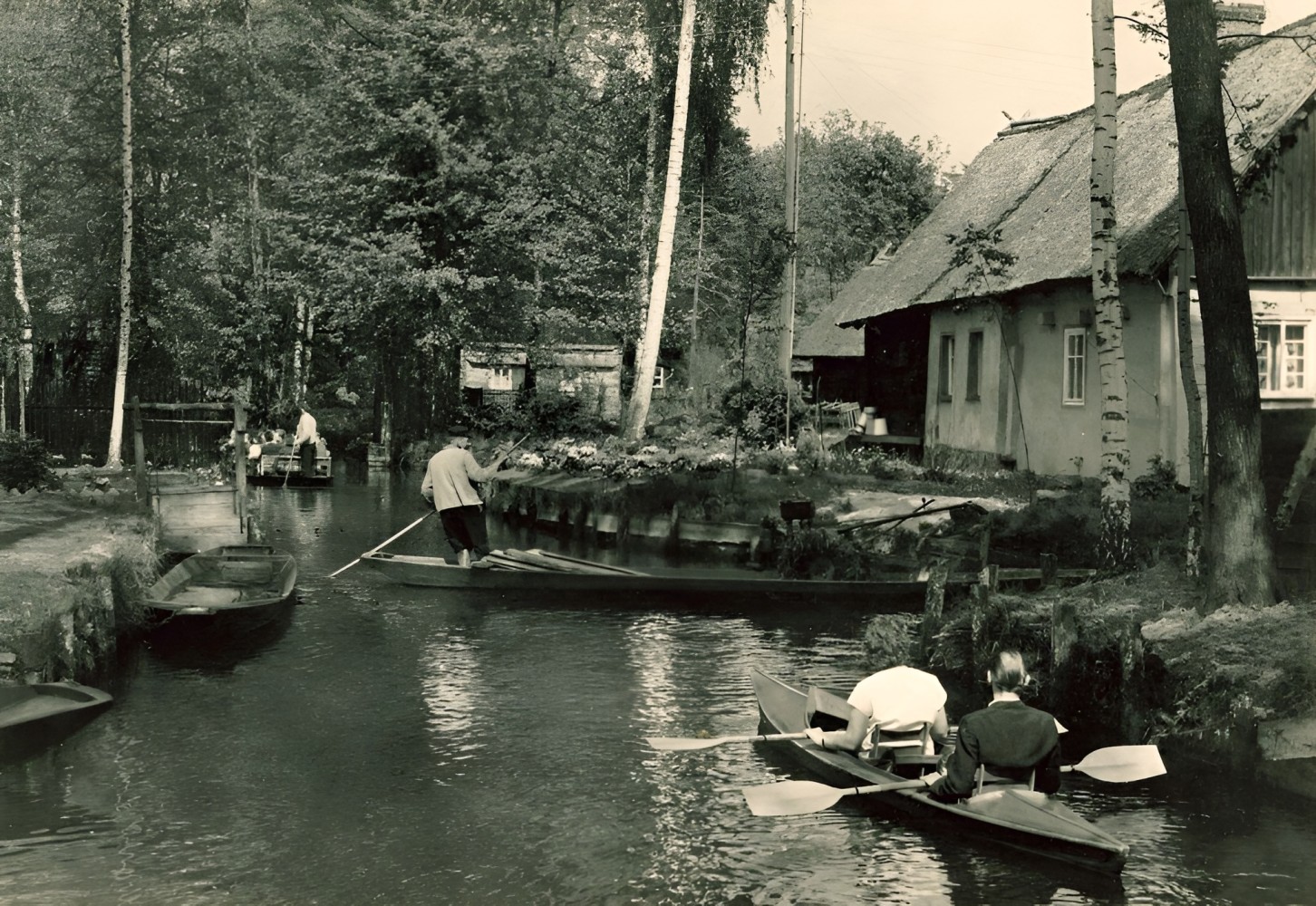
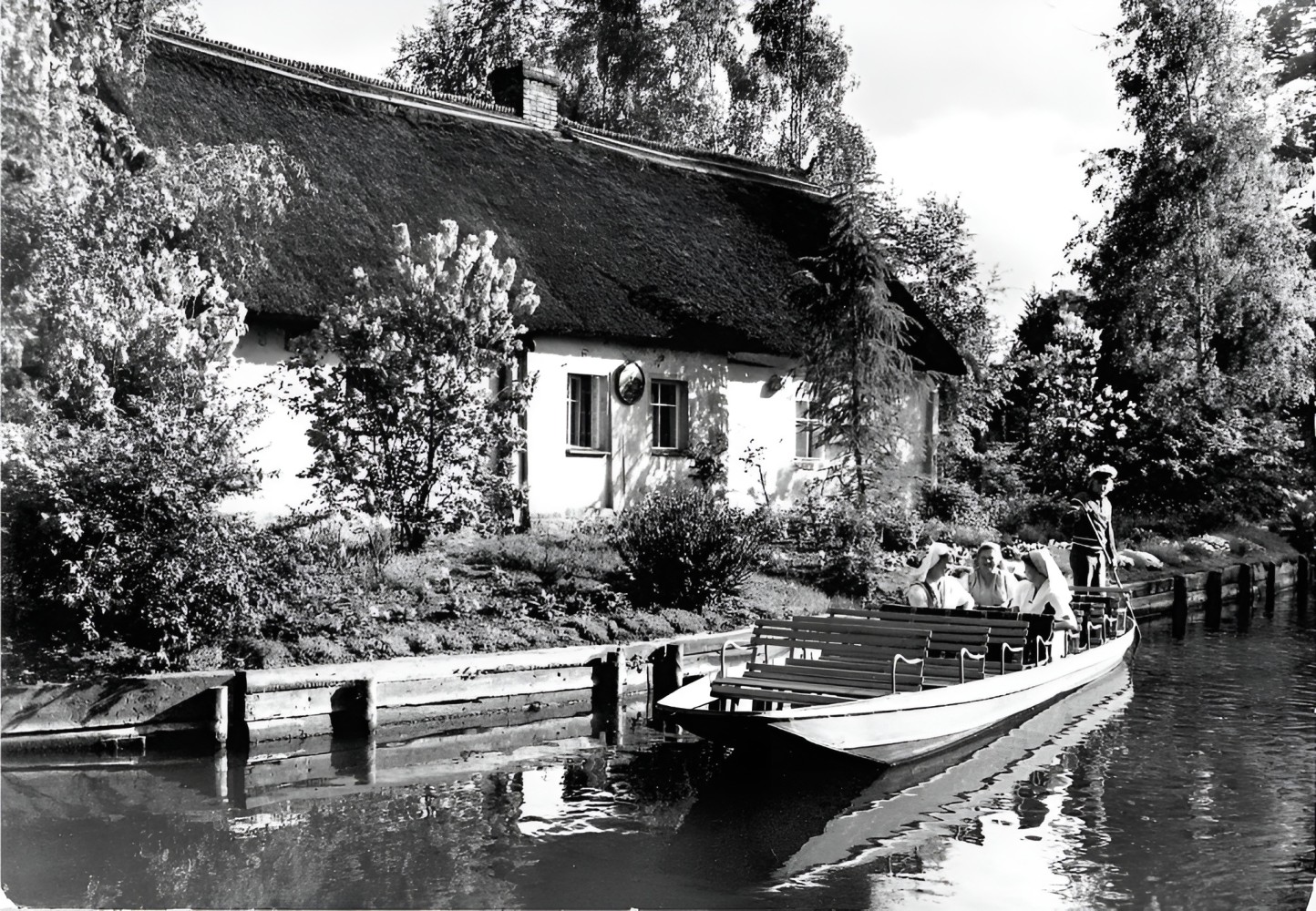
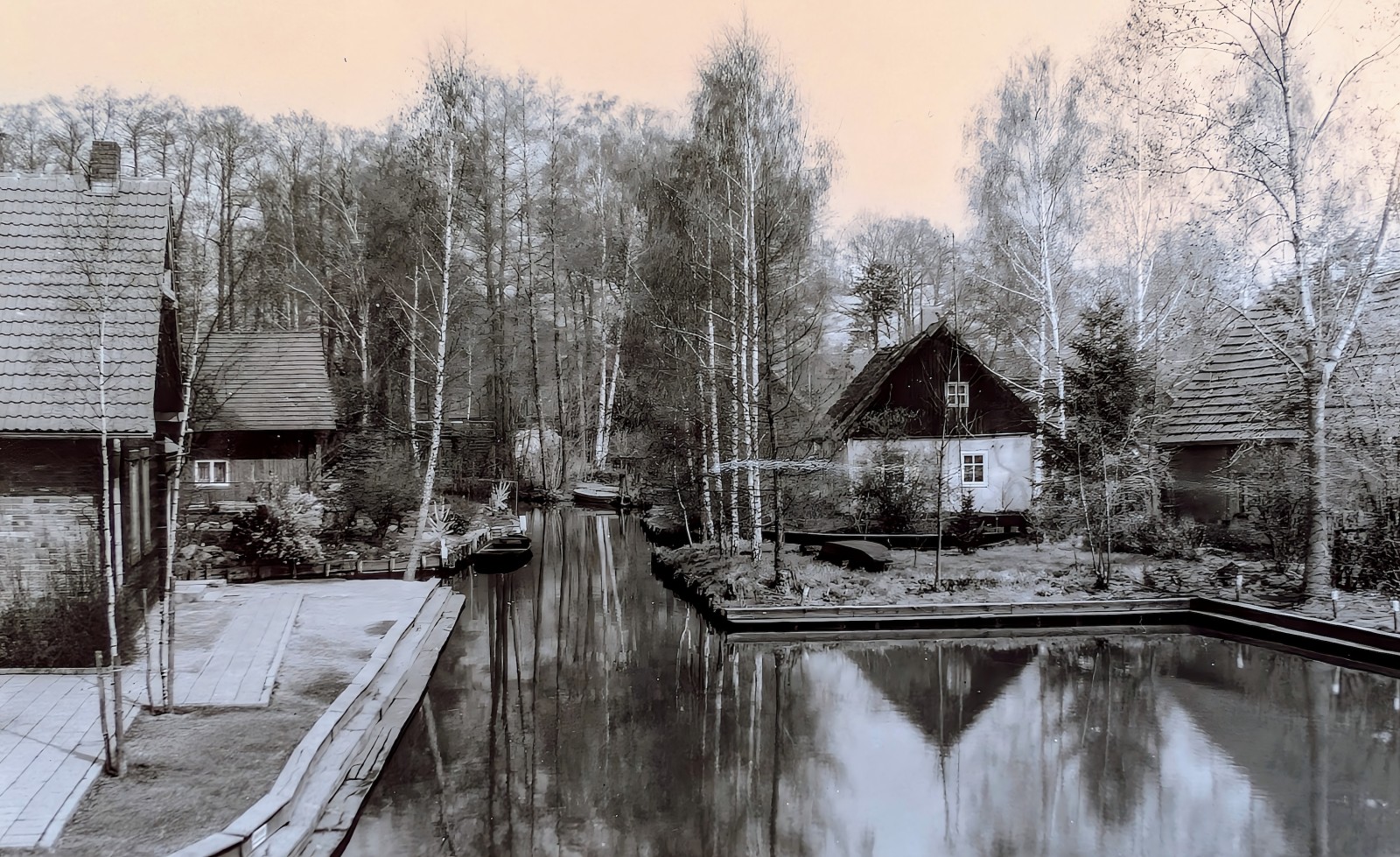
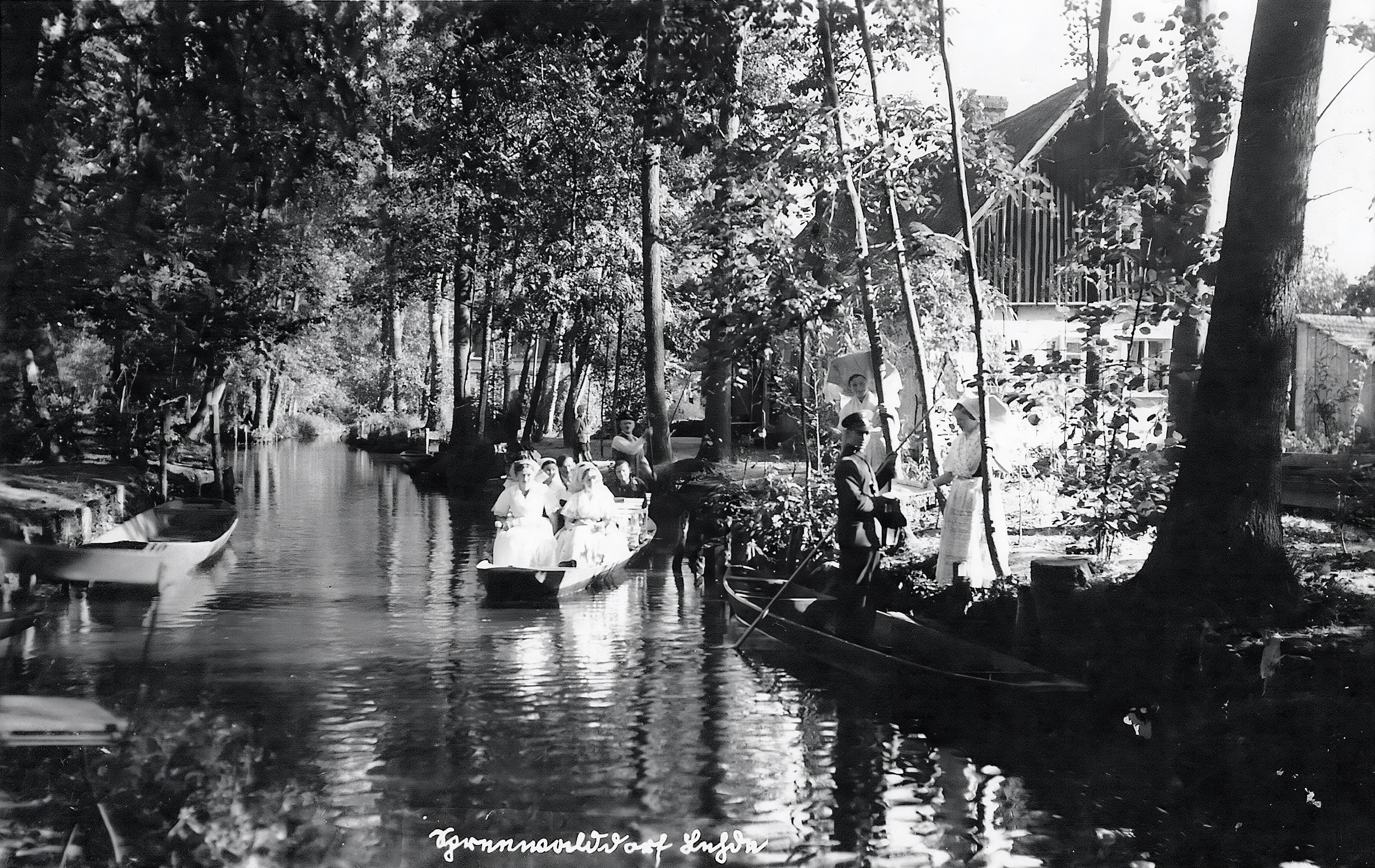
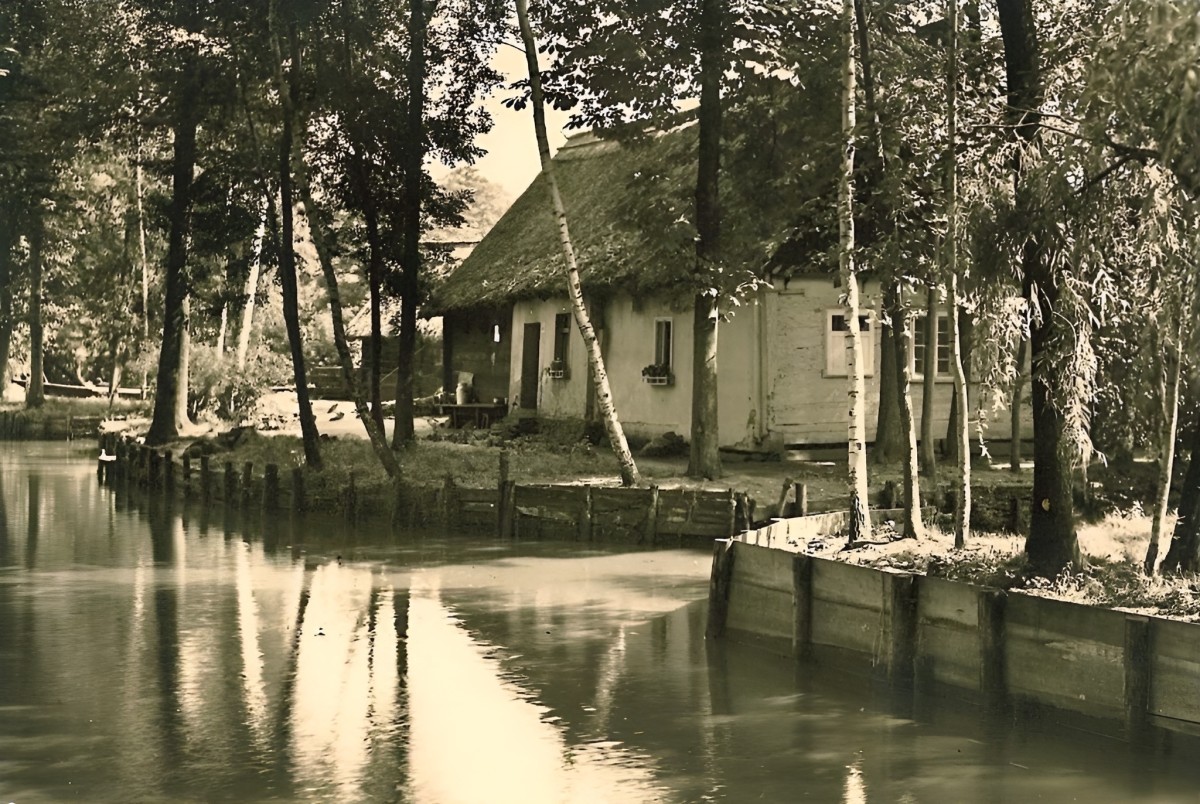
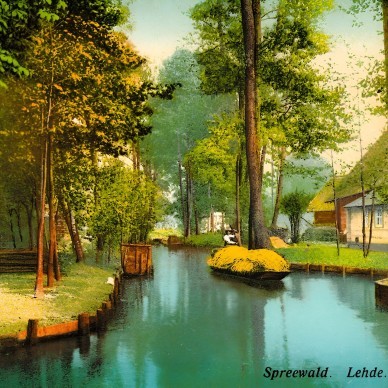
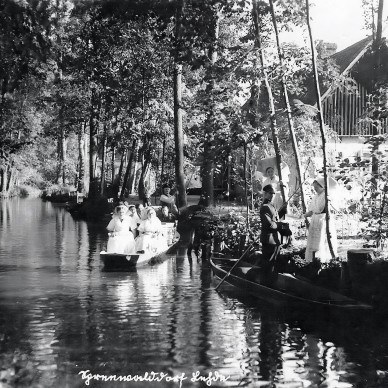
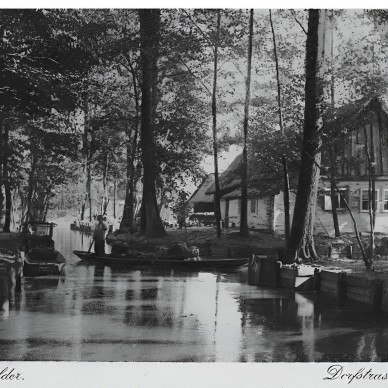
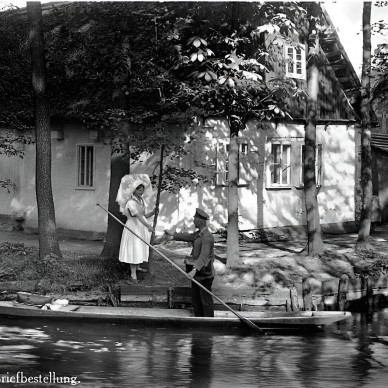
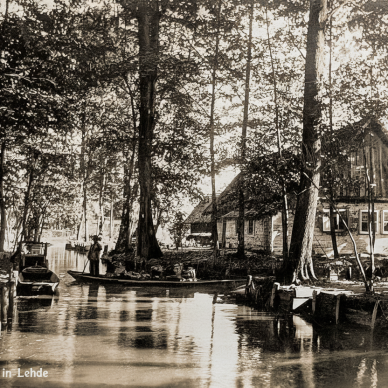
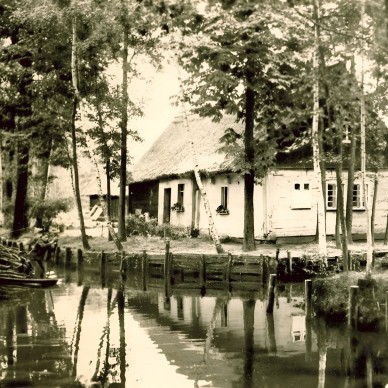
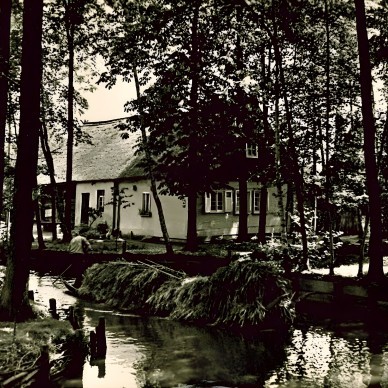
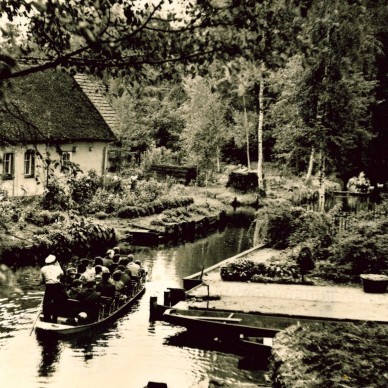
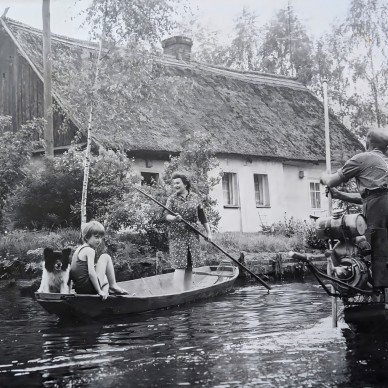
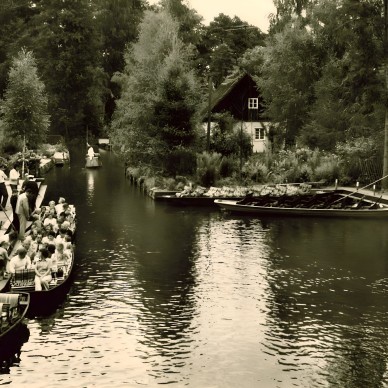
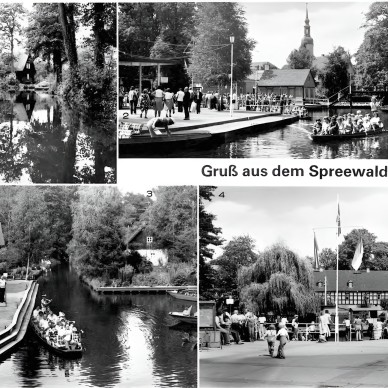
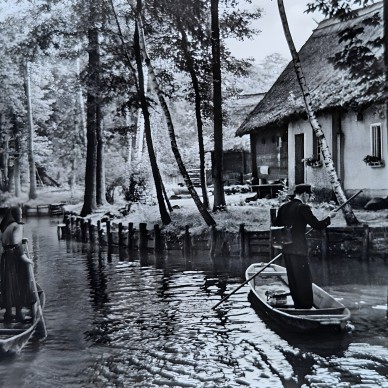
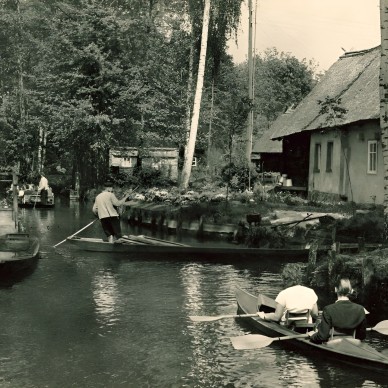
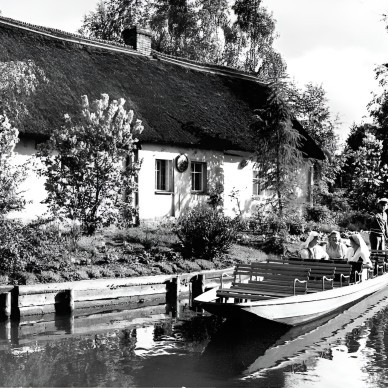
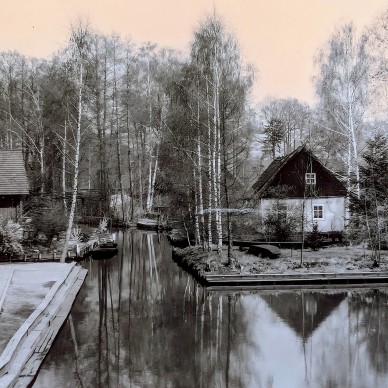
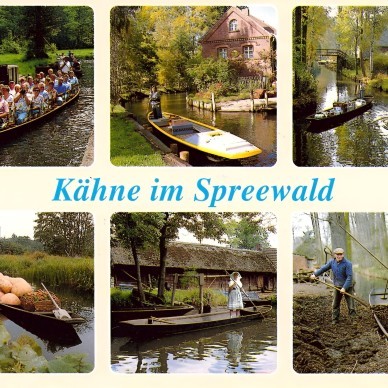
From no later than the 1930s, the ensemble appeared on postcards from numerous publishers – and did not stop doing so for more than five decades. The oldest attested cards are from Hermann Striemann (Cottbus, No. 321, postmarked 1934, caption: "Spreewaldbilder – Alte Gehöfte in Lehde") and Otto Schökel (Cottbus, No. 12, postmarked 1934). Both were sent from Lübbenau – by visitors who saw the plot and sent a card home.
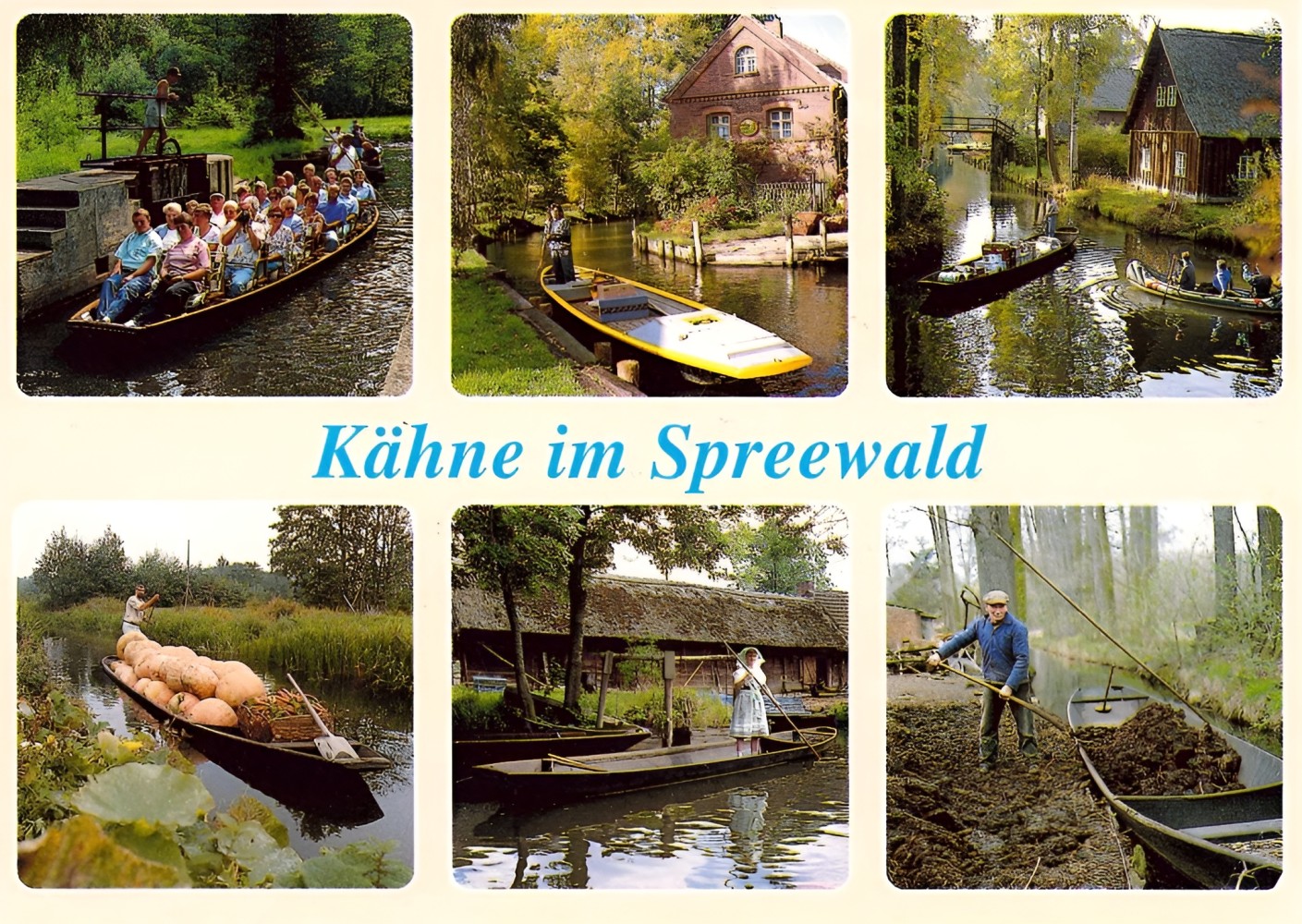
These were followed by editions from Arthur Redecker (Berlin-Tempelhof), Verlag Jank (Burg/Spreewald), Willy Klautzsch (Magdeburg) and, for decades and in large print runs, from VEB Bild und Heimat Reichenbach – the most important postcard publisher in the GDR. At the same time, the motif appeared with West German publishers such as De Beeke (Schwanewede) and Graphokopie H. Sander KG (West Berlin). In total, 13 postcards from at least 10 different publishers are attested – from the Weimar Republic into the 1980s, on both sides of the Iron Curtain. And: a postcard showing the current estate has also recently become available in Lübbenau.
The puzzle
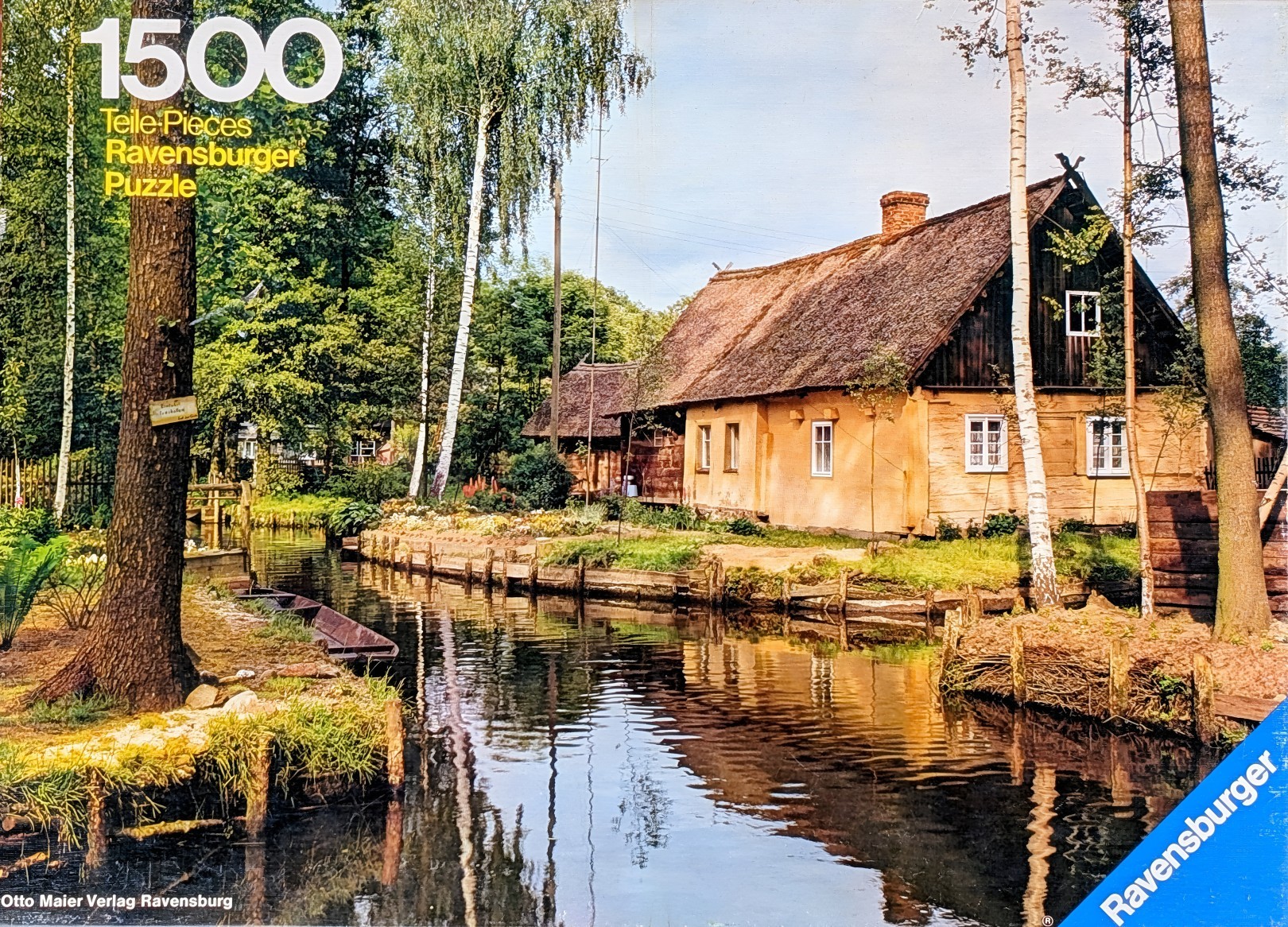
In 1982, the ensemble was released as a Ravensburger puzzle – title: In the Spreewald, art. no. 6255680, confirmed by the Ravensburg company archive. Anyone who received it as a Christmas present back then was putting together this very plot without realising it.
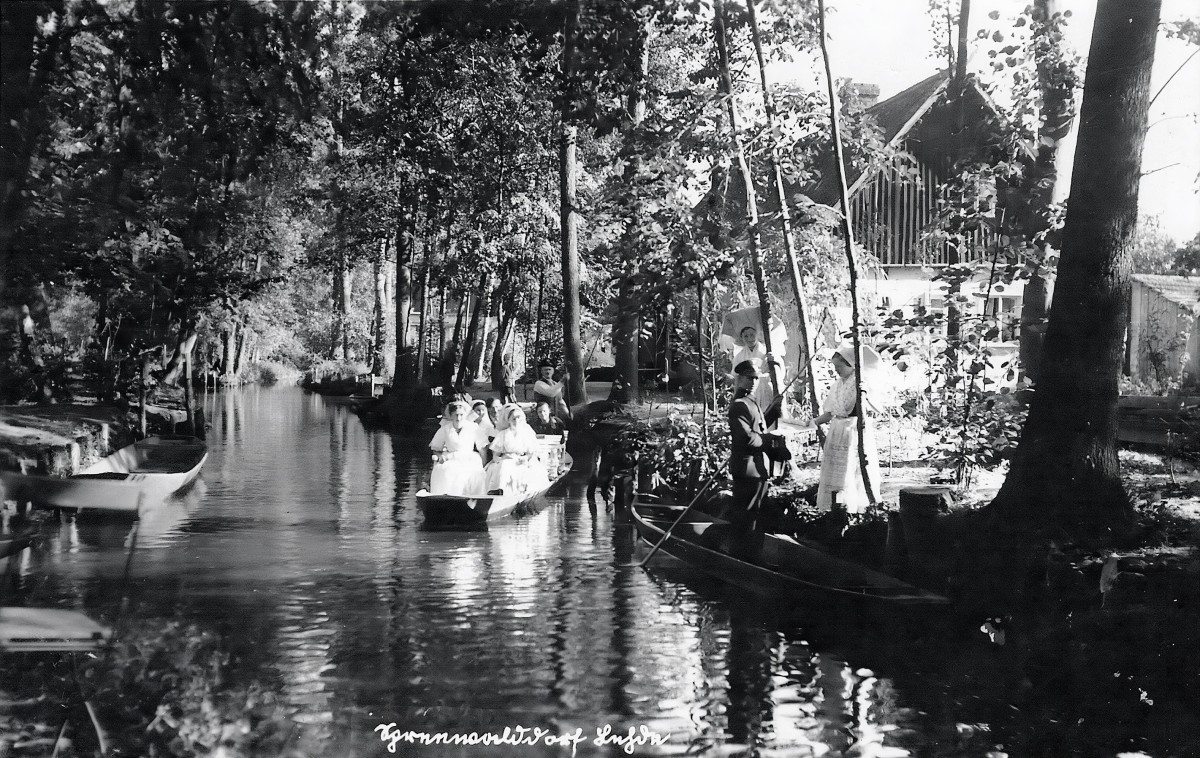
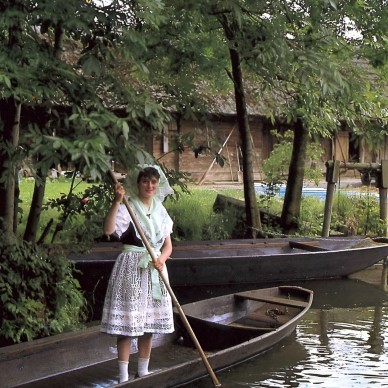
Lehde is no ordinary village. Cars do not drive "over the water". Anyone wanting to reach these farmsteads takes the punt – just as the Spreewald people have done for centuries when they go to market or harvest vegetables. On foot or by bike you go via bridges.
The village belonged to the manor of Lübbenau and grew slowly. At the beginning of the 18th century, barely more than a dozen people lived here. Colonists opened up new areas; fishing and vegetable growing fed the families. At the beginning of the 20th century, Lehde had around 300 inhabitants. Today the entire village is protected as a monument zone – one of the few ensembles in Germany that has preserved traditional Sorbian building and settlement forms in this completeness.
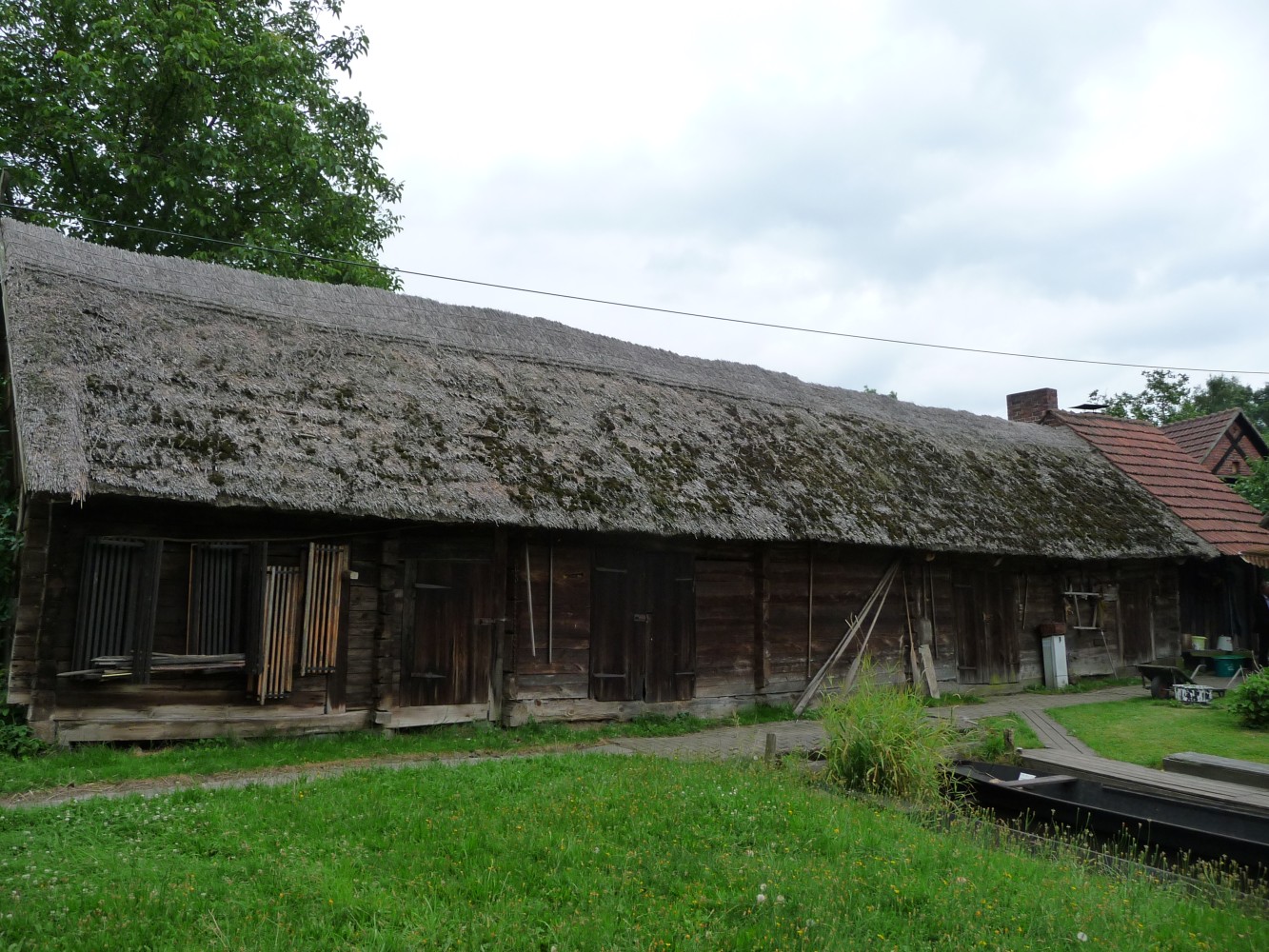
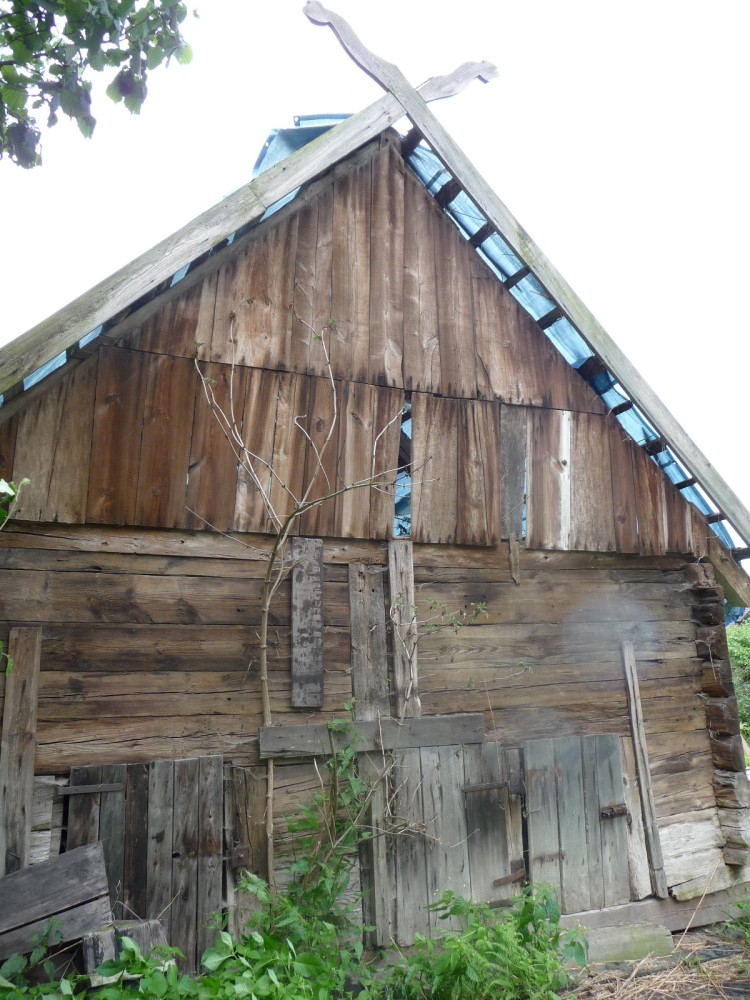
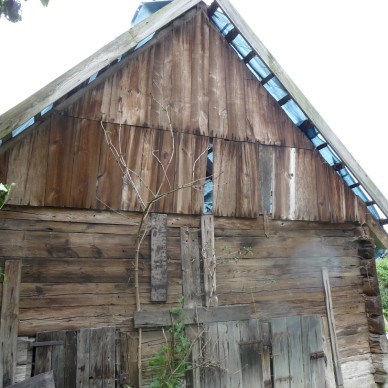
The heart of the plot is the barn. The elongated log construction with its interlocking house corners, the two-leaf wooden doors and the characteristic saddleback roof has been a listed monument on the monument list of the state of Brandenburg since 2011.
The Brandenburg State Office for Monument Conservation and State Archaeological Museum (BLDAM) justifies the listing with its historical, folkloric and urban-planning significance: the building is "an illustrative example of a traditionally constructed stable and barn building, of which only a few comparable buildings of this size and originality remain preserved in Lehde."
Dendrochronology: timbers from the time of Napoleon
A dendrochronological survey dated the sill timbers to winter 1804/05 – the timbers were thus felled when Napoleon was reorganising Europe. They still stand today. On the gables are crossed bargeboards, the so-called "Schlangenköpfe" (snake heads). In the Spreewald they are still considered today to be protection against evil spirits.
The entire development of the plot is also part of the village of Lehde, which is protected as a monument zone – both Haus anno 1750 and Bienenhaus were renovated under the conditions of monument protection.
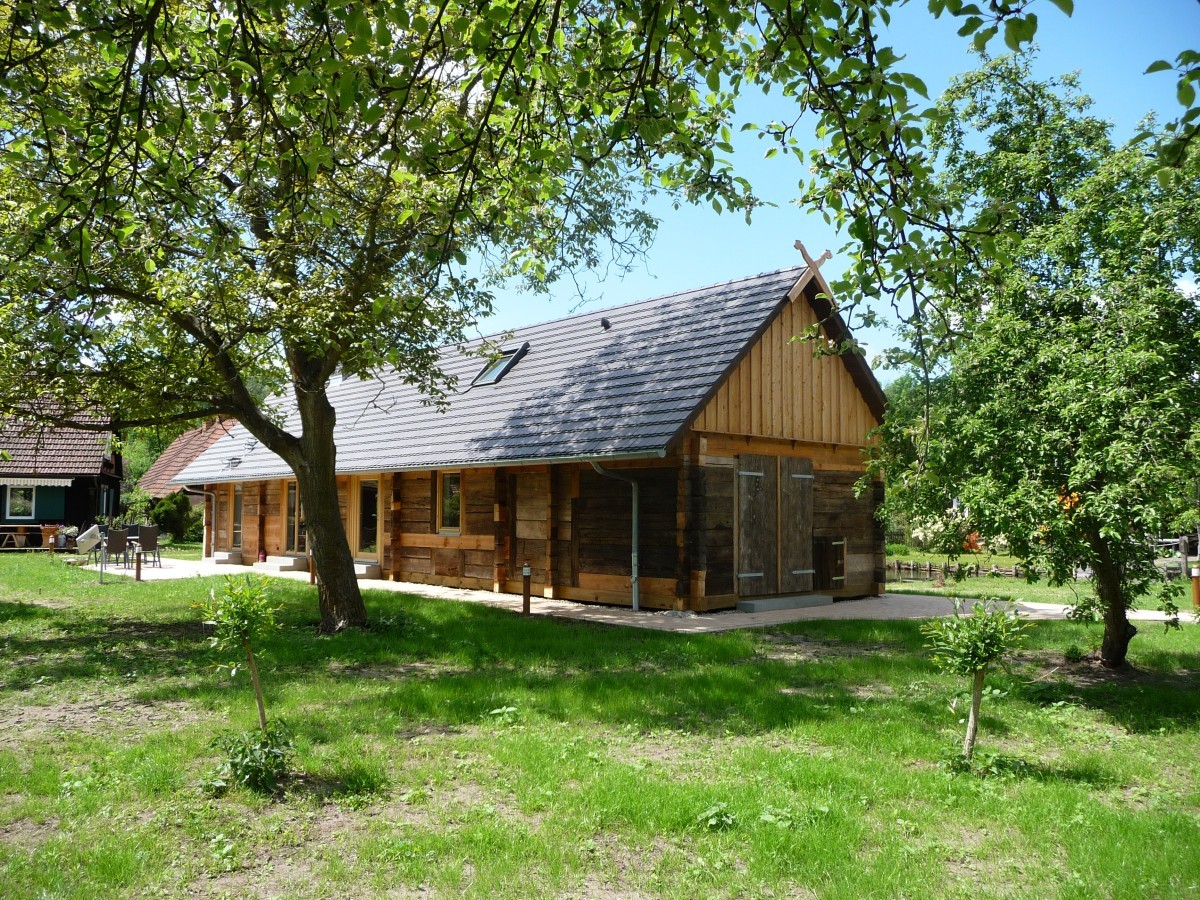
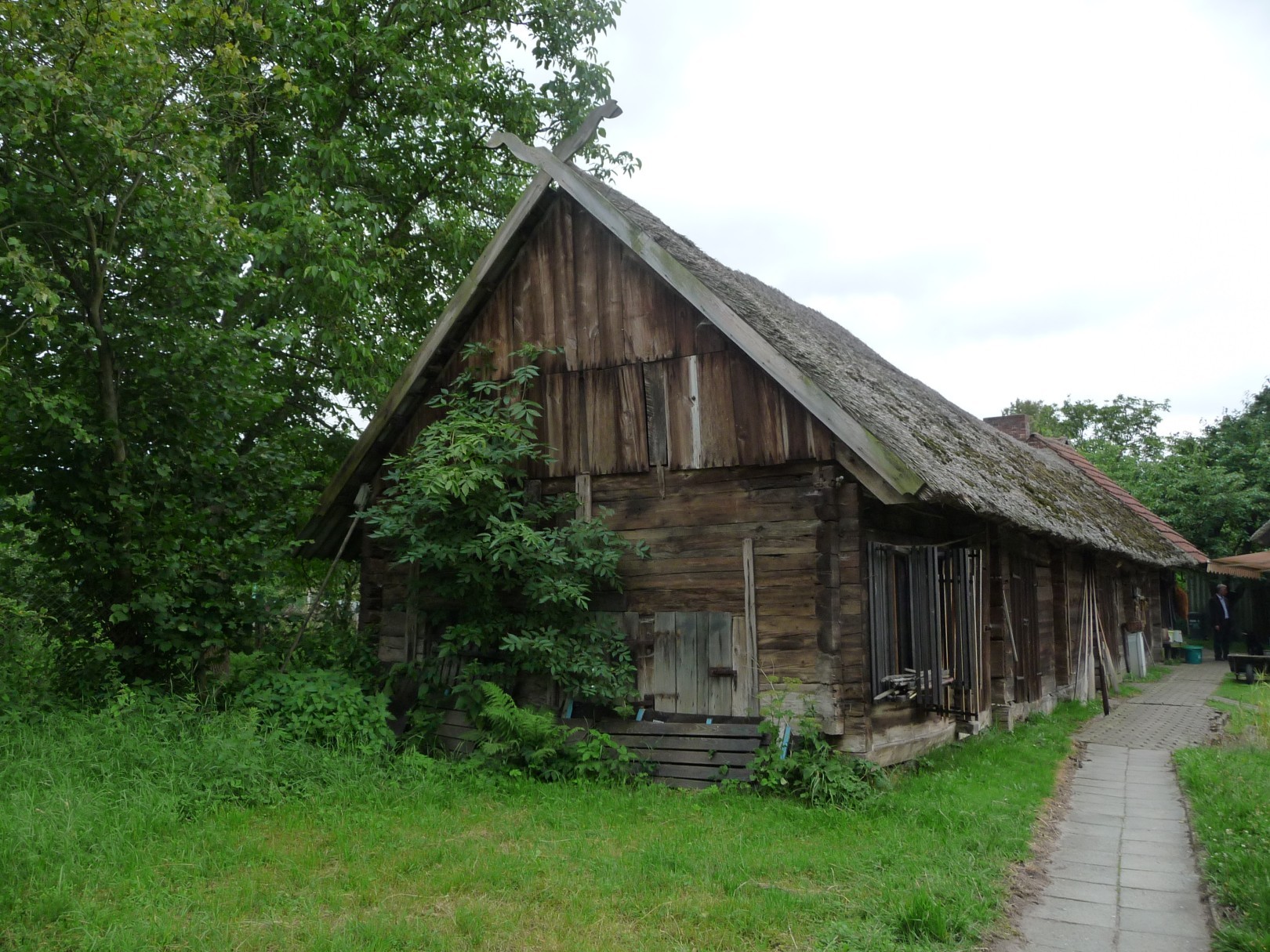
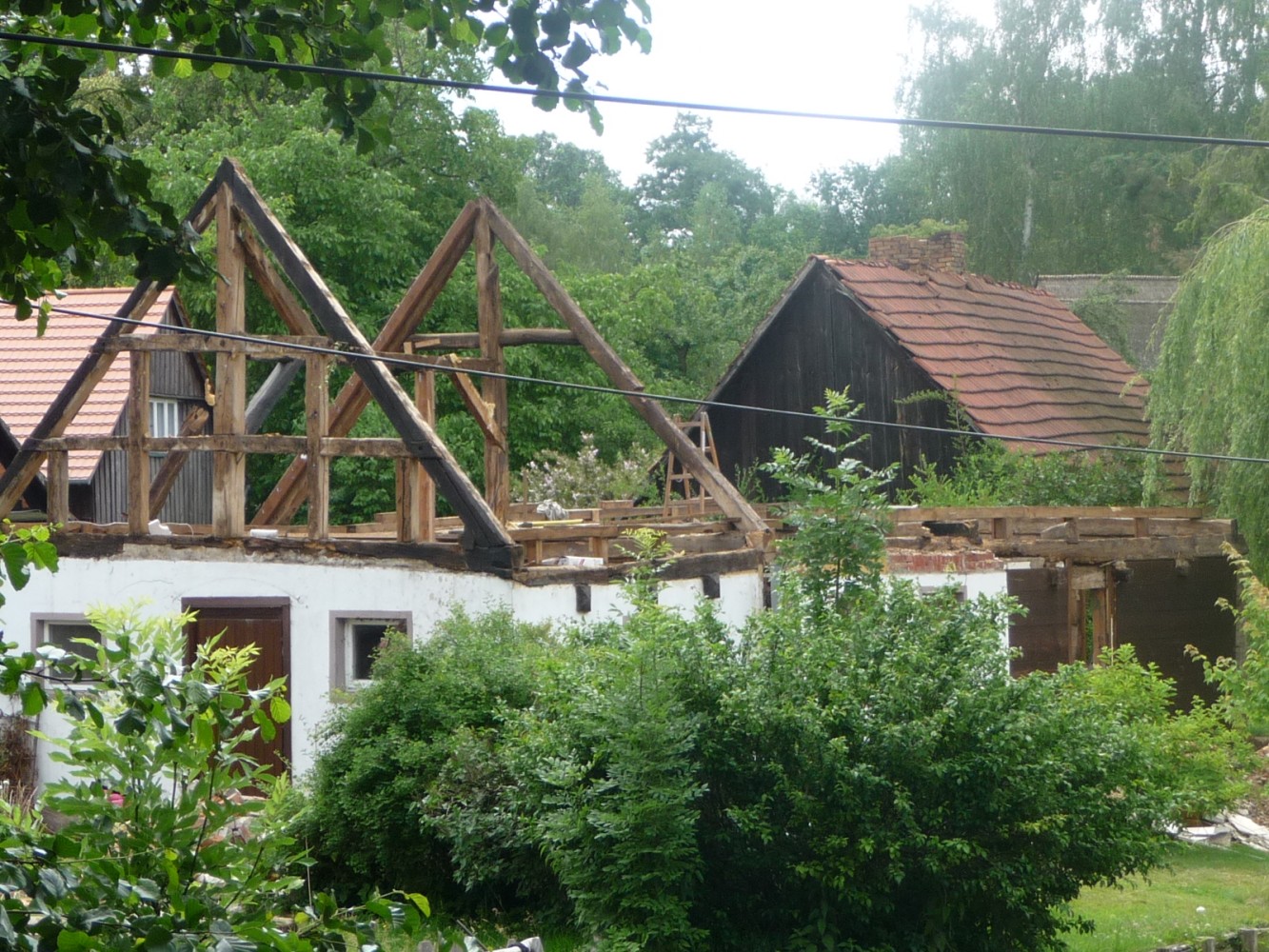
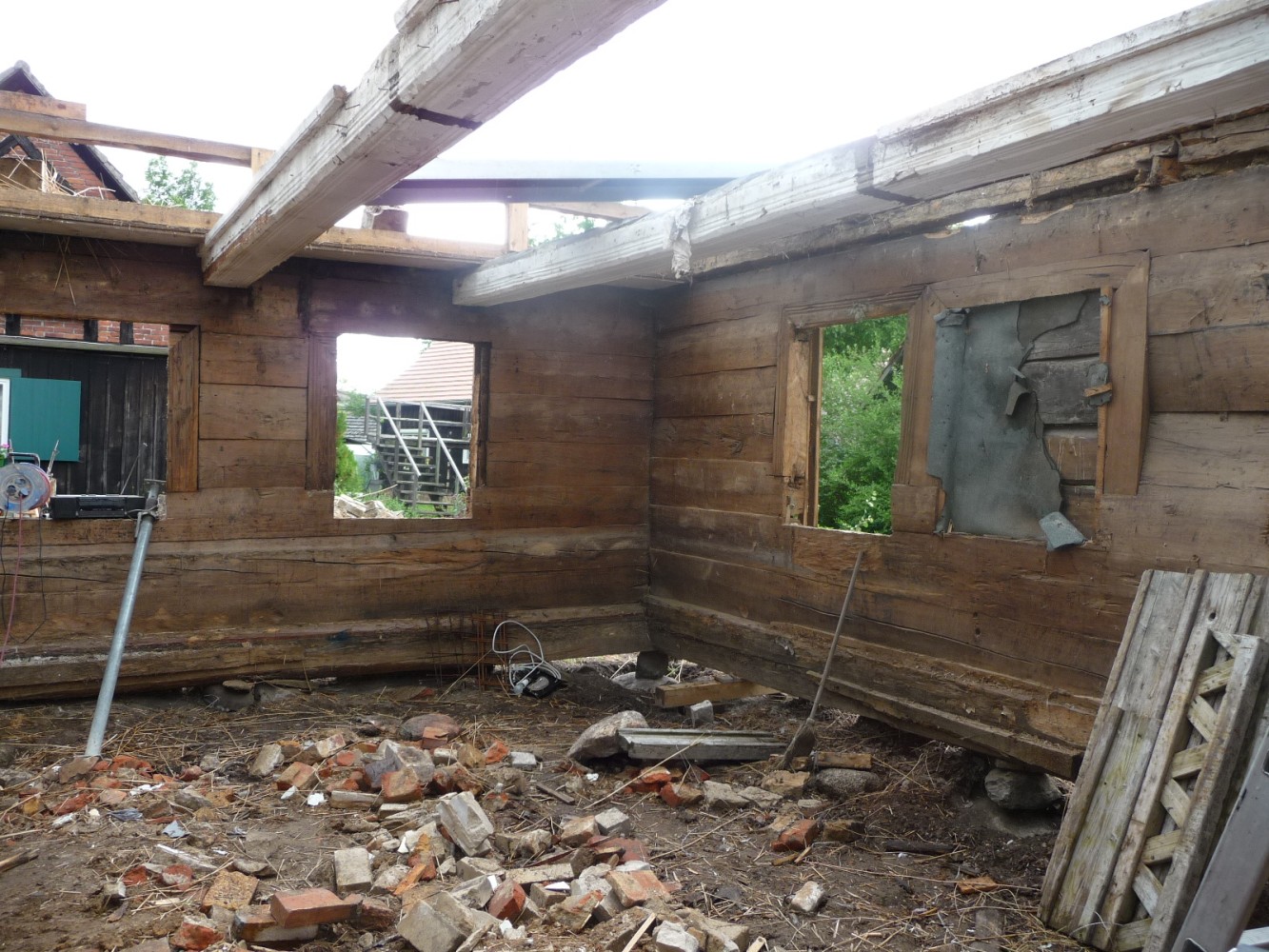
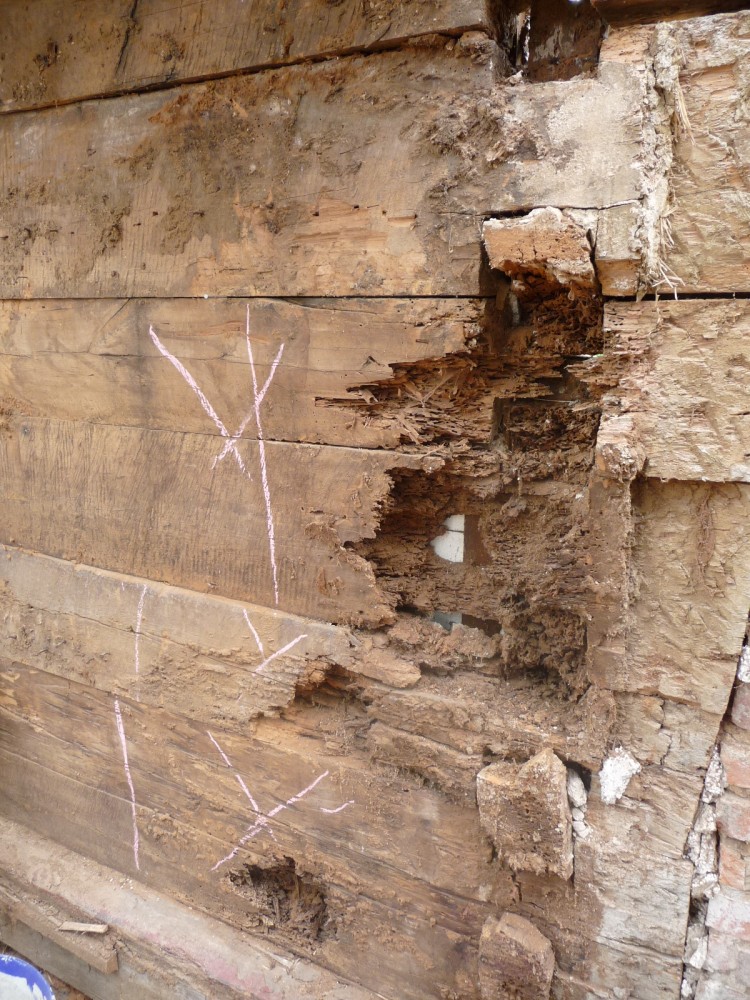
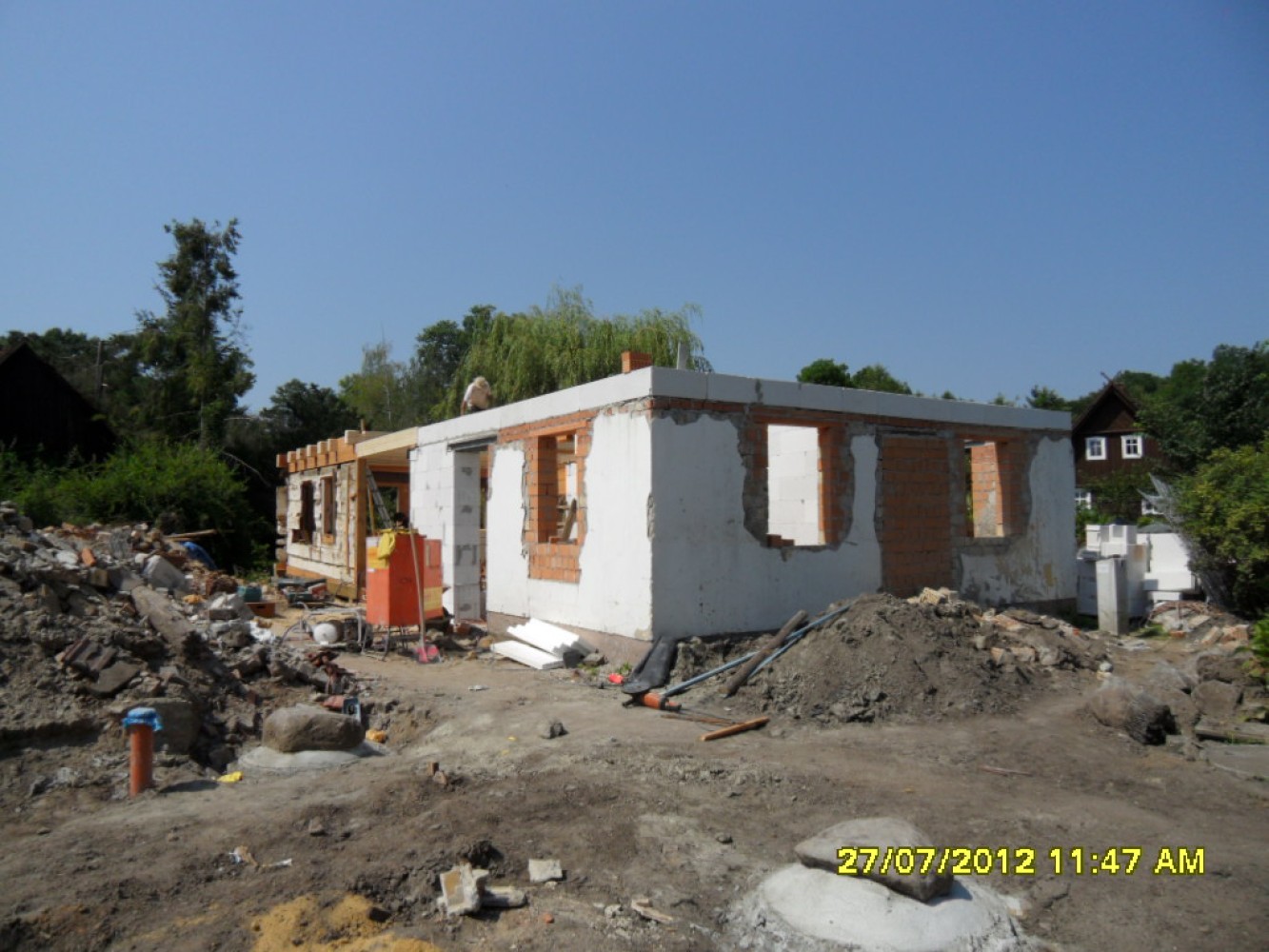
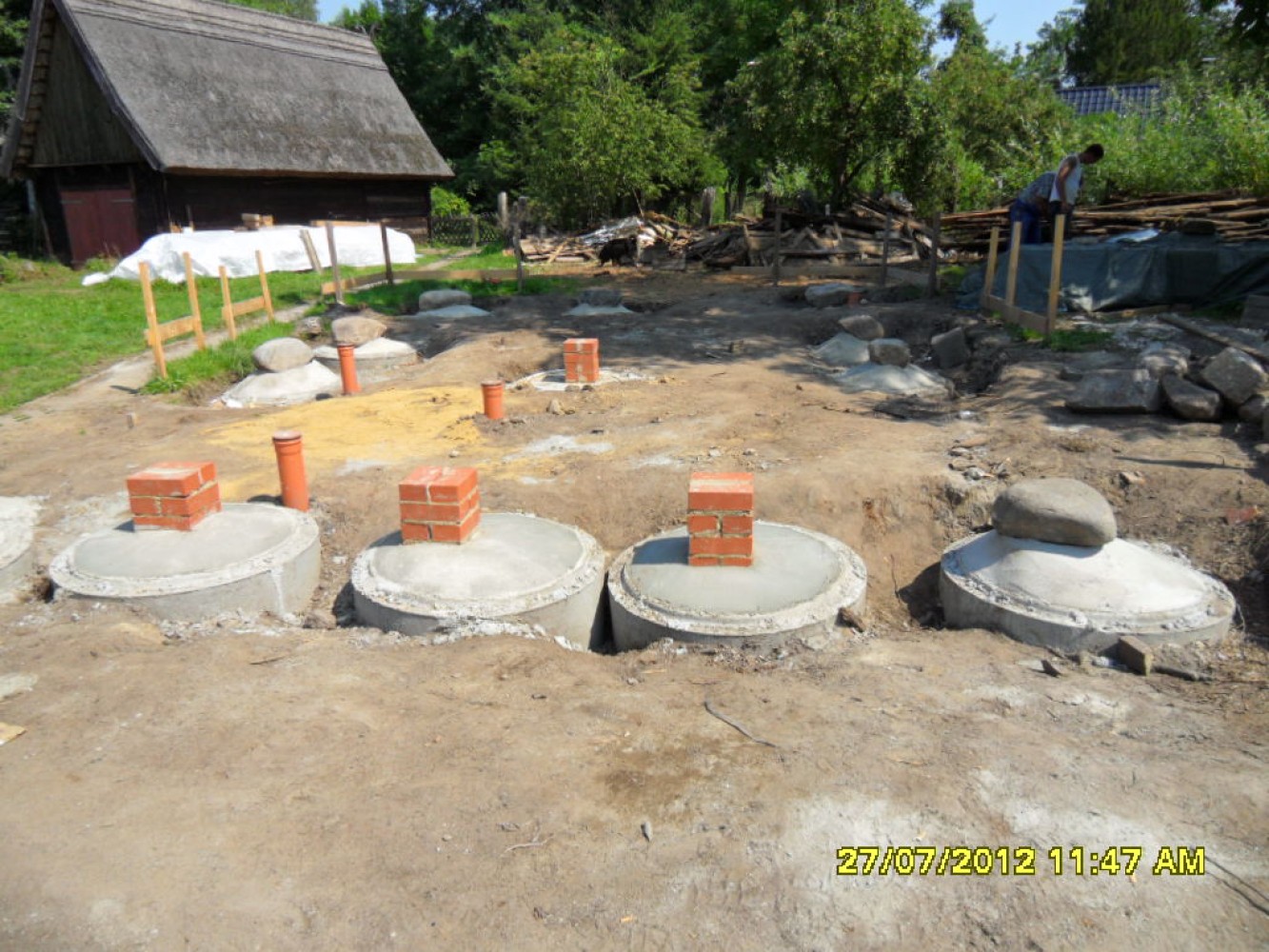
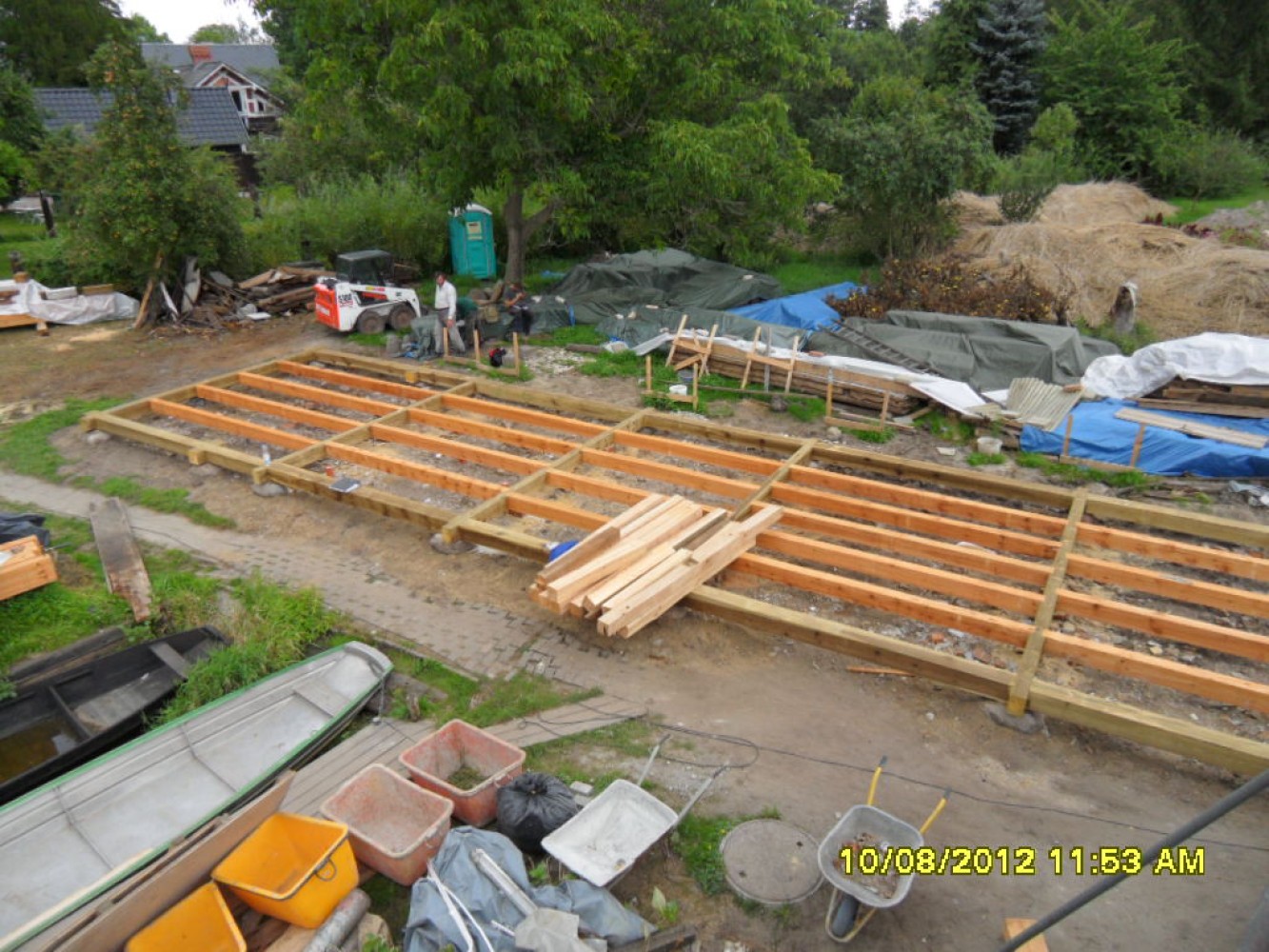
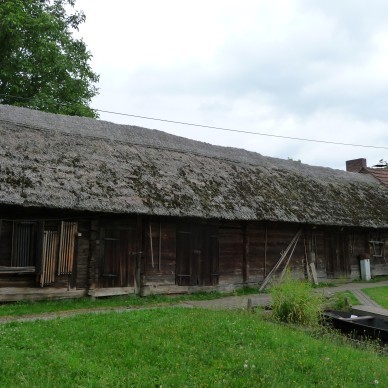
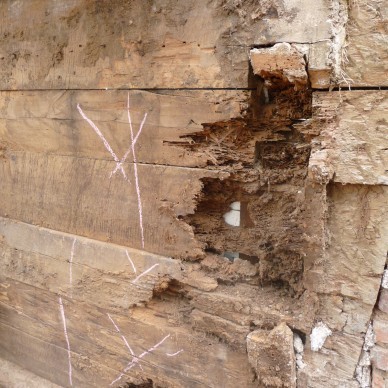
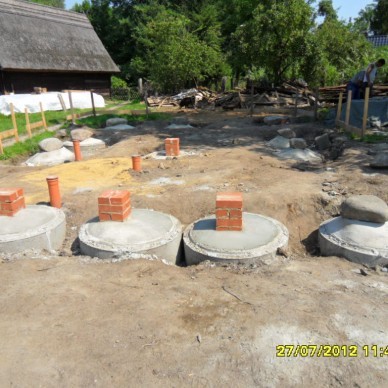
2011 was high time. The buildings had survived decades without major interventions – a stroke of luck for the historic fabric, but not a permanent state. The barn, the listed monument, was on the verge of collapse: structure weakened, foundations scoured, the building fabric acutely endangered in several places.
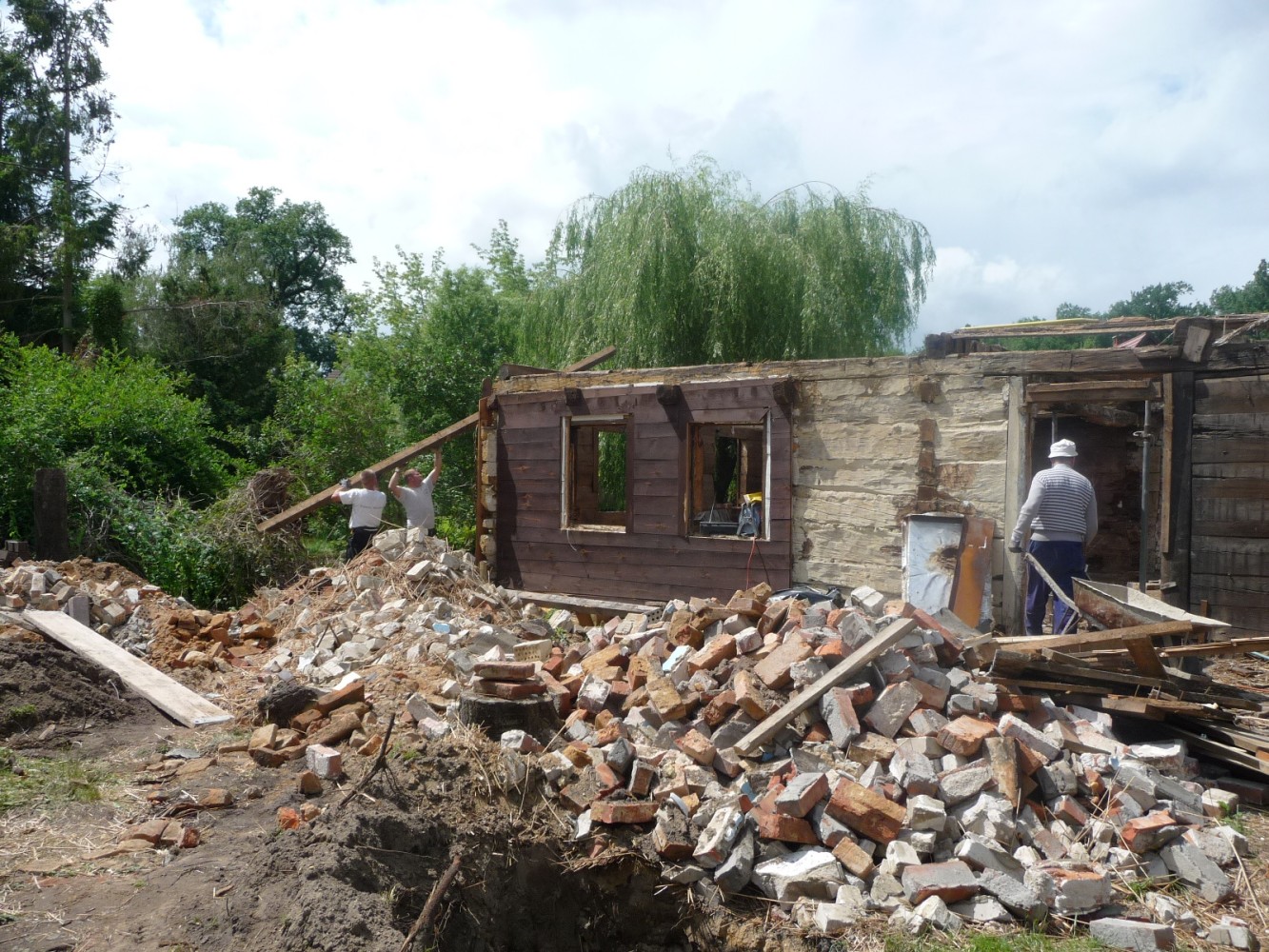
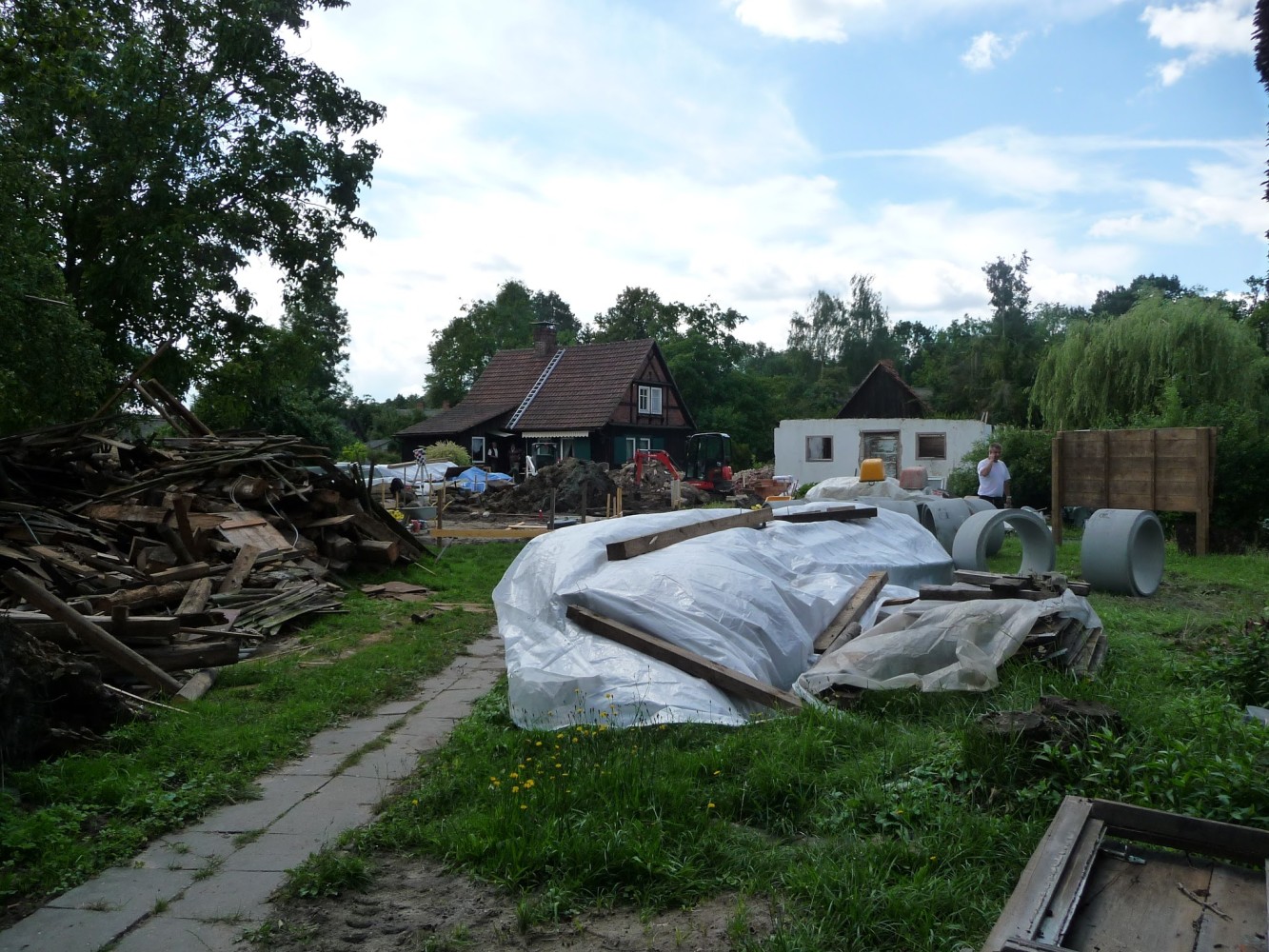
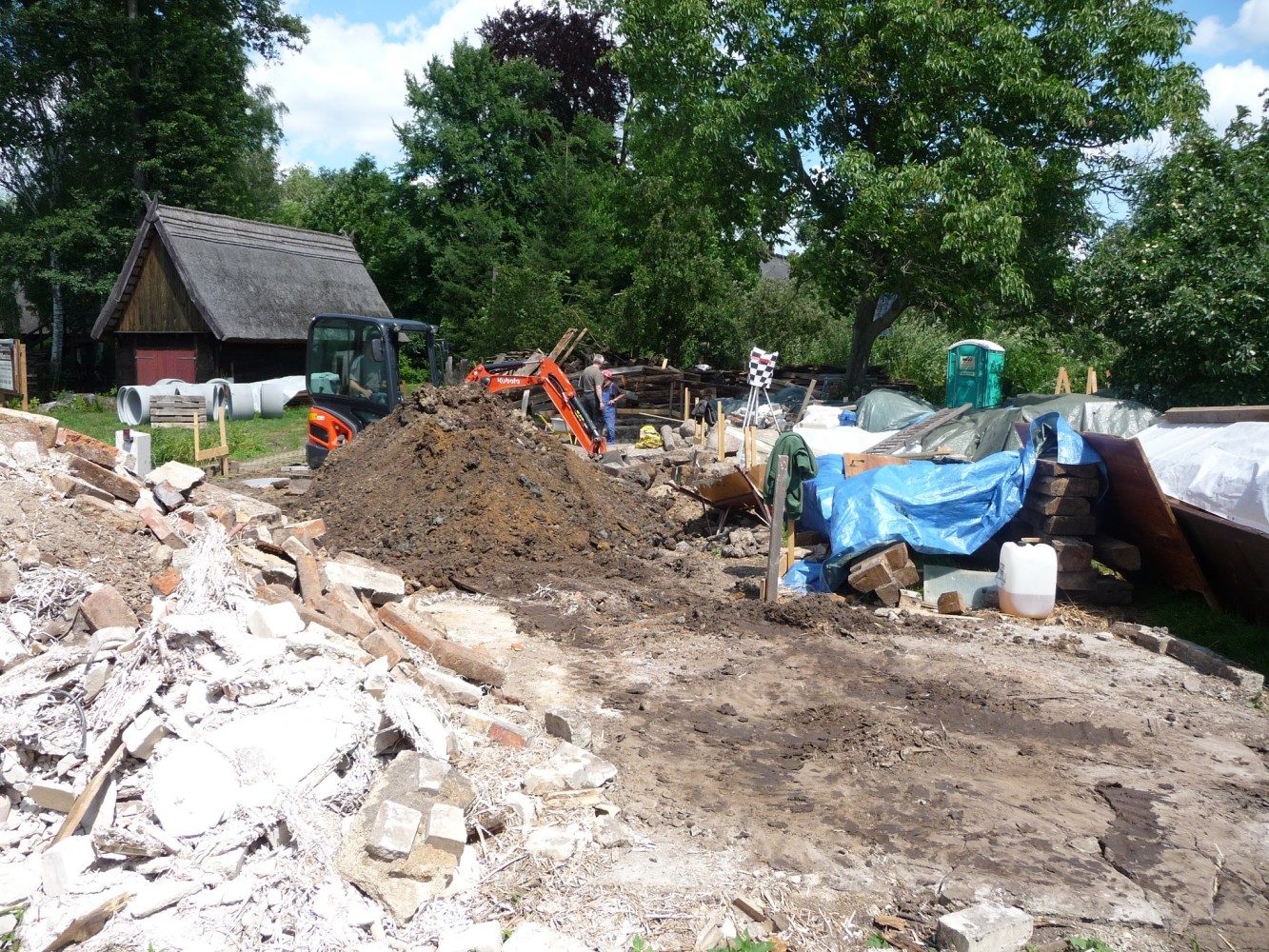
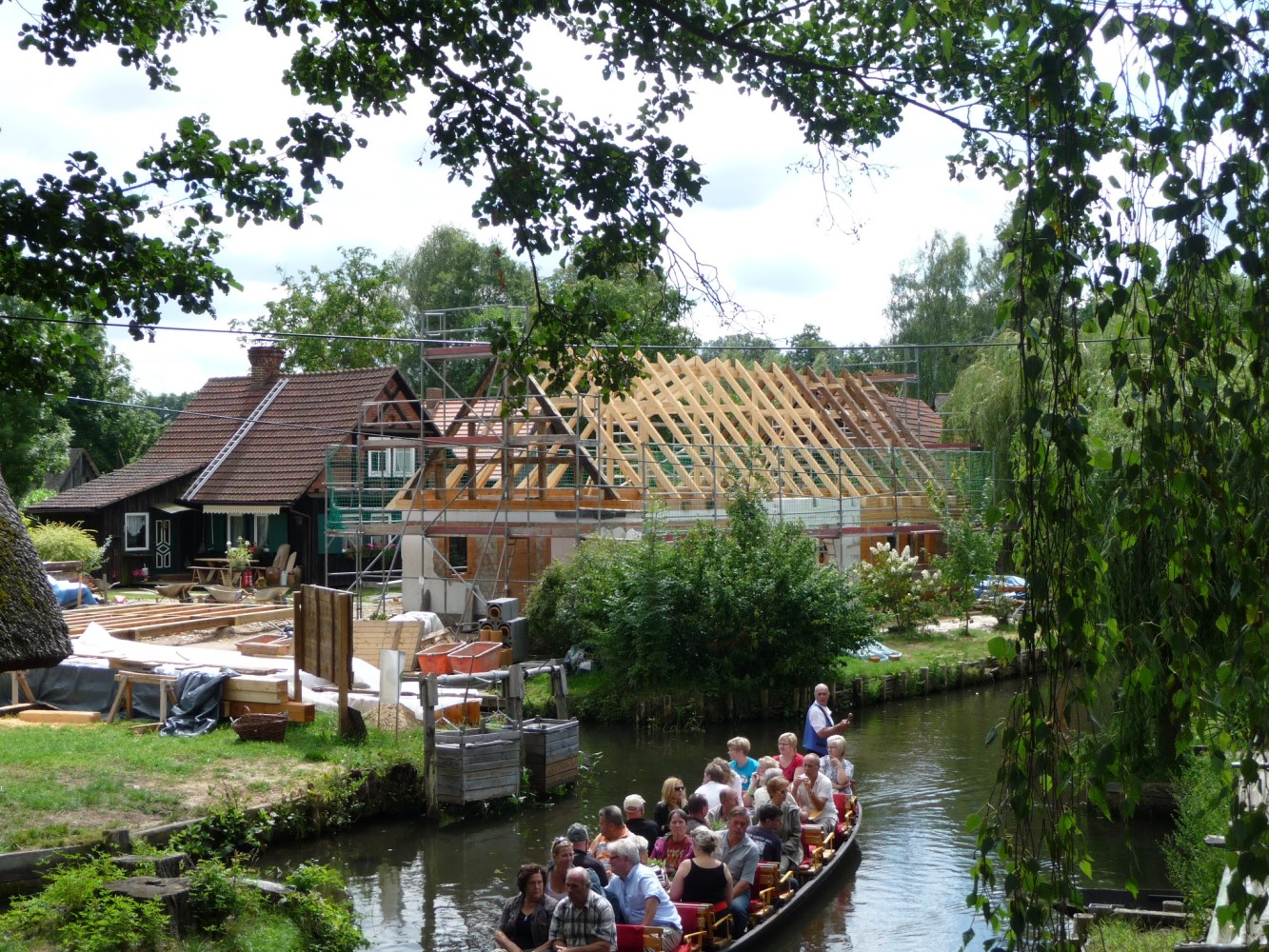
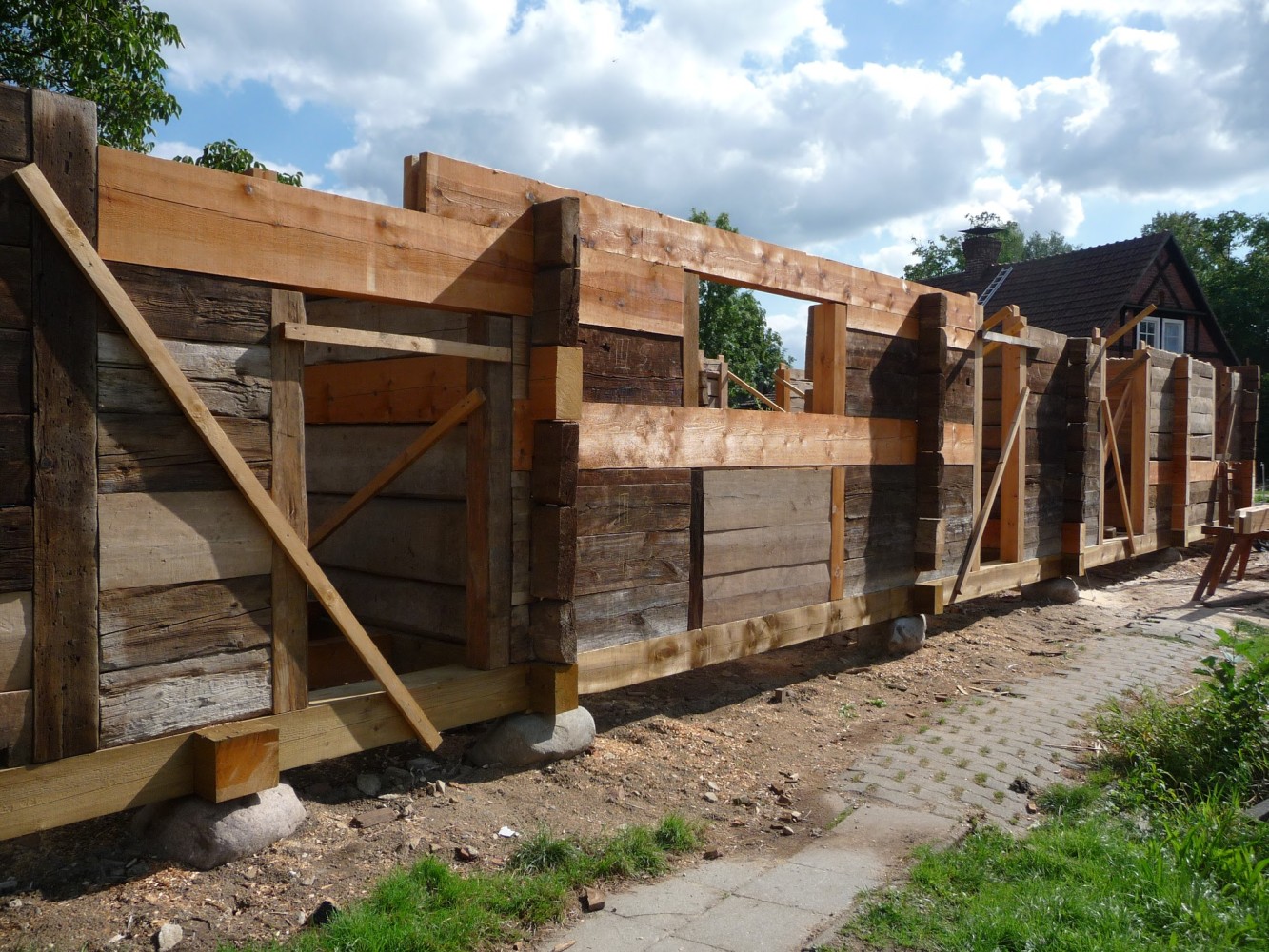
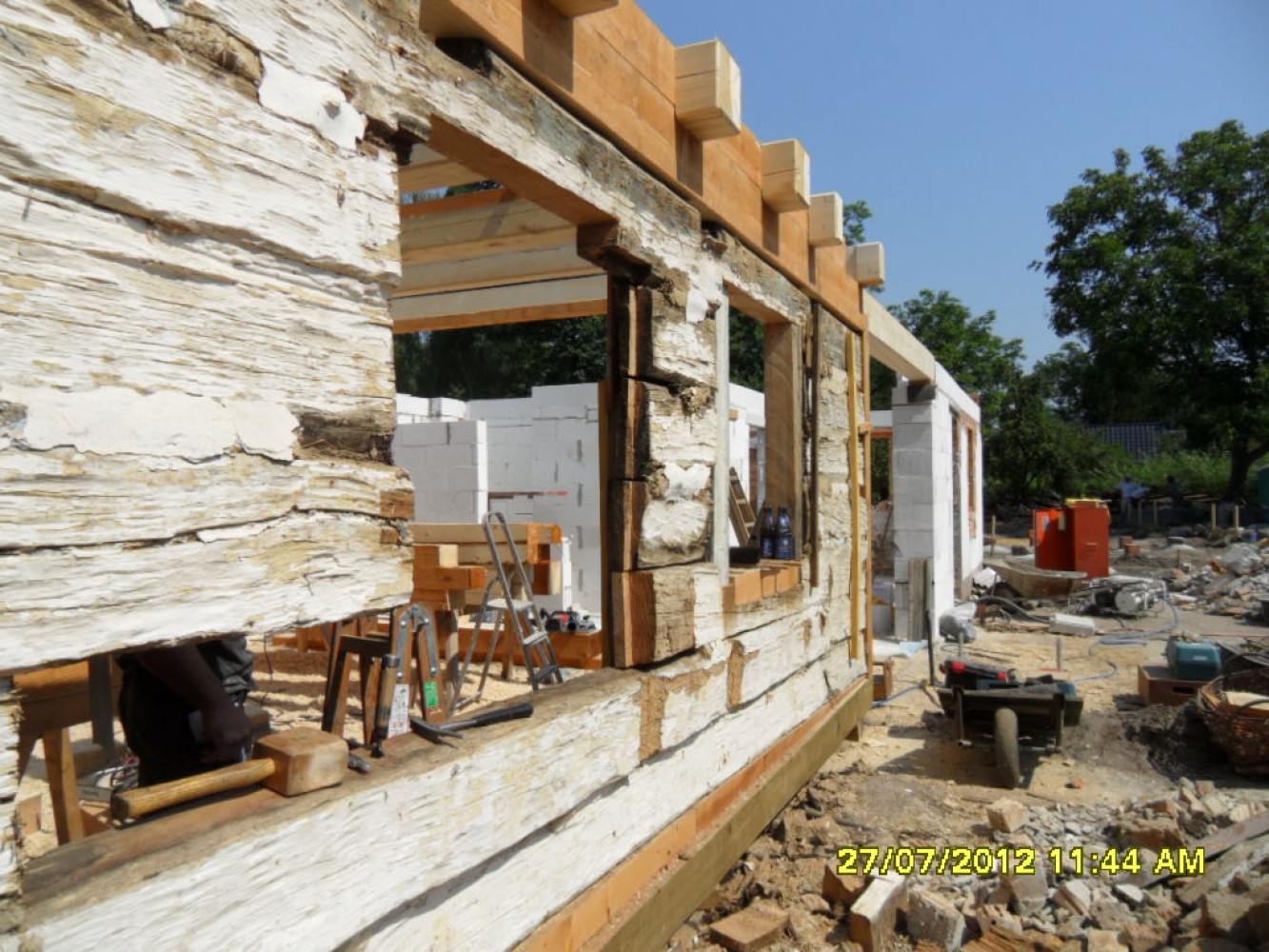
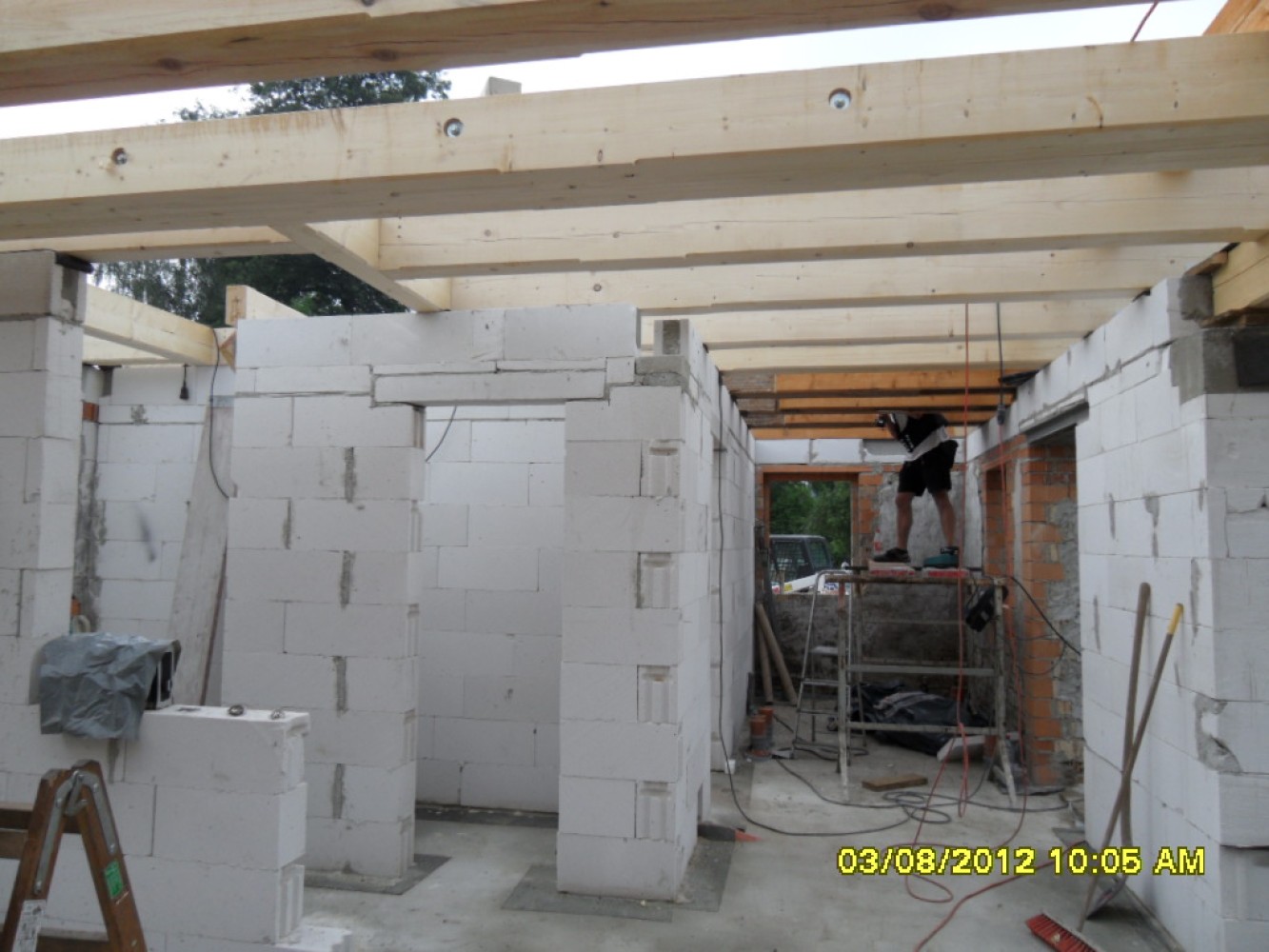
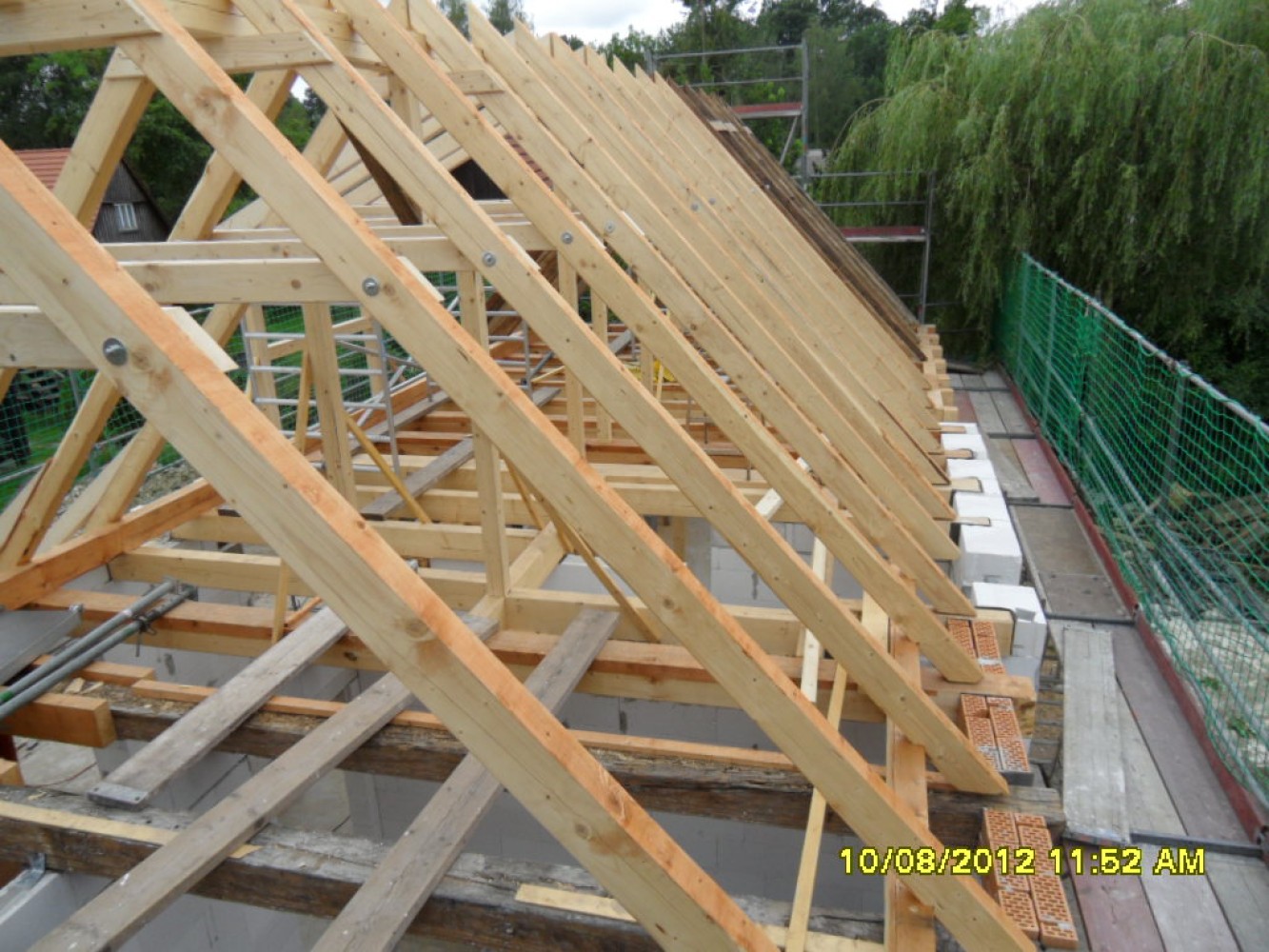
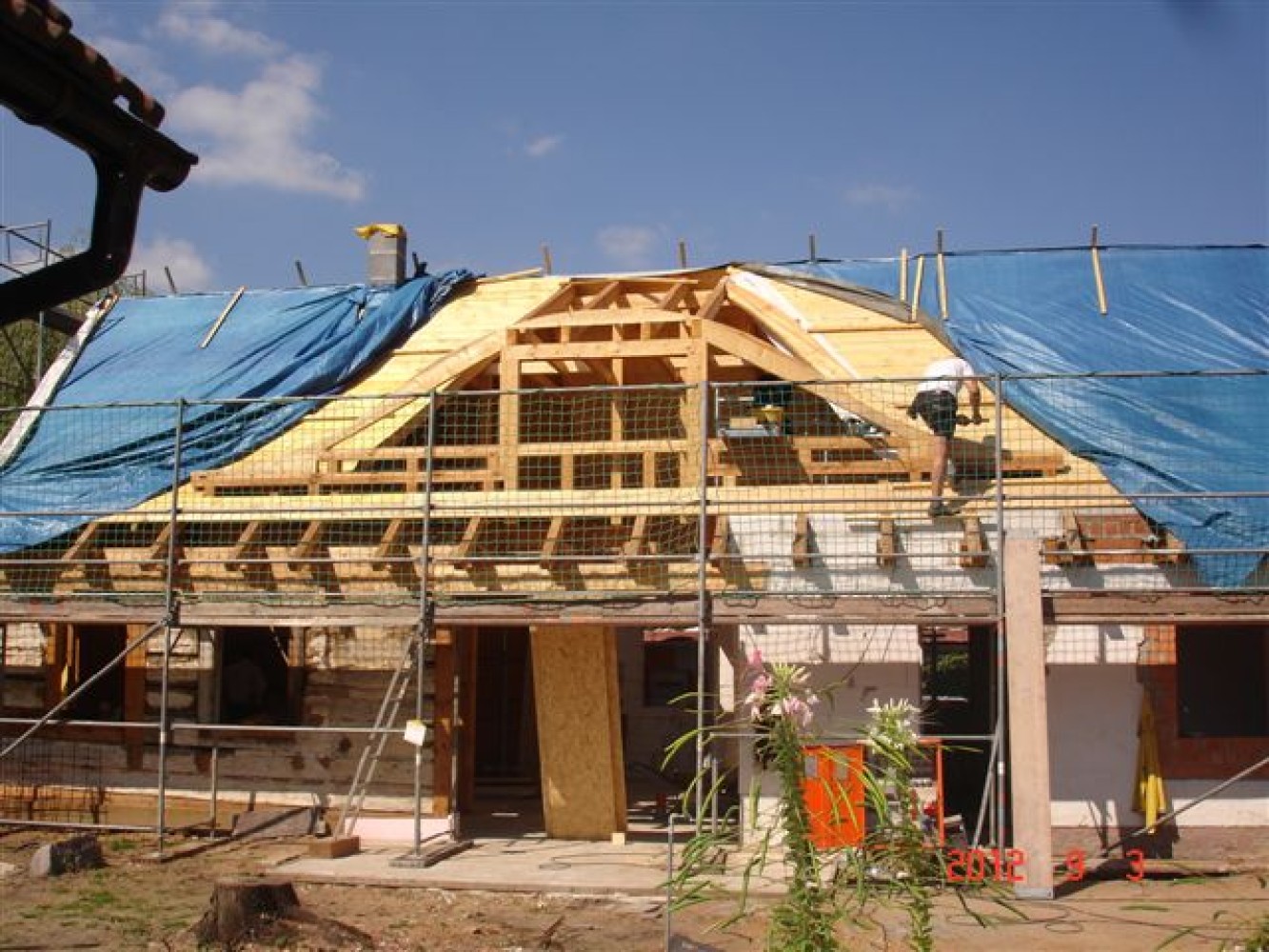
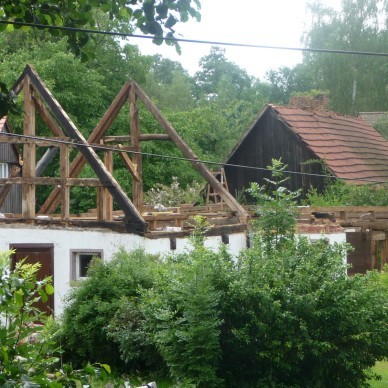
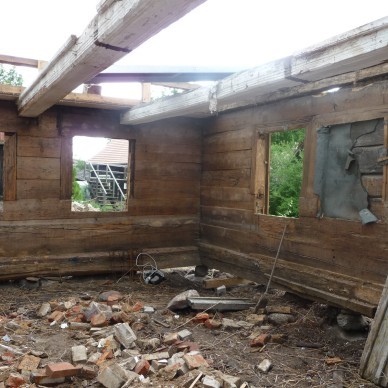
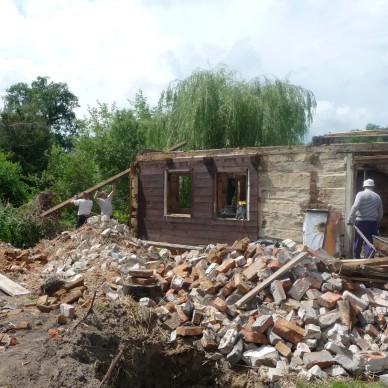
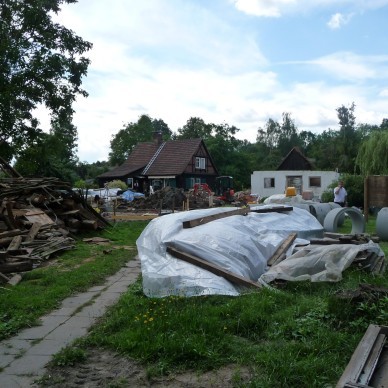
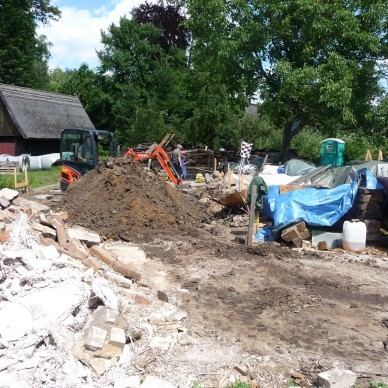
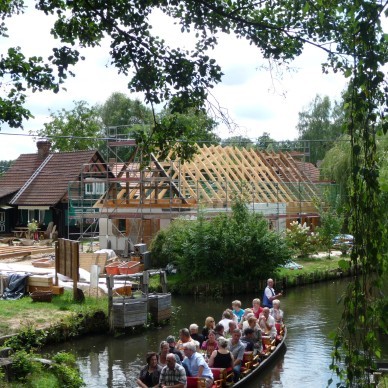
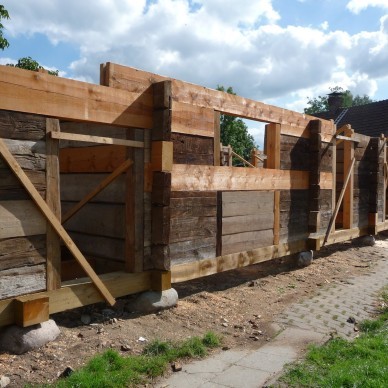
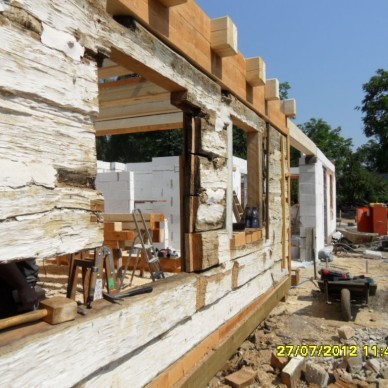
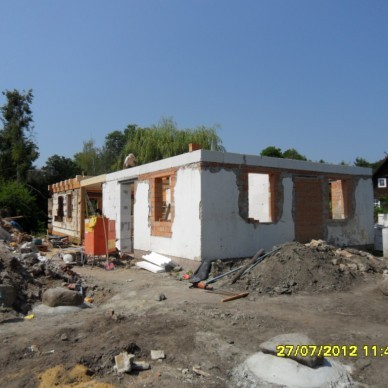
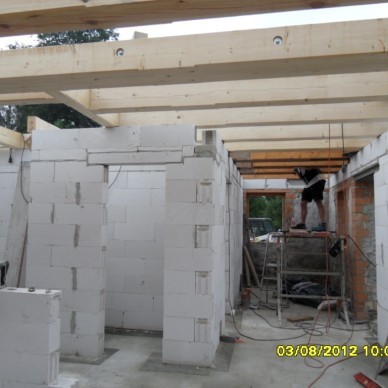
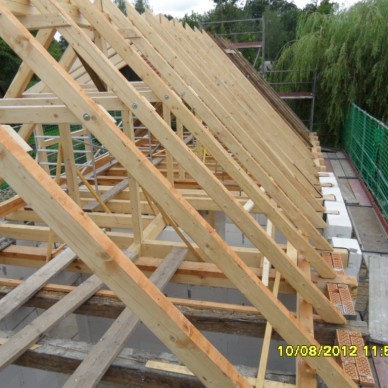
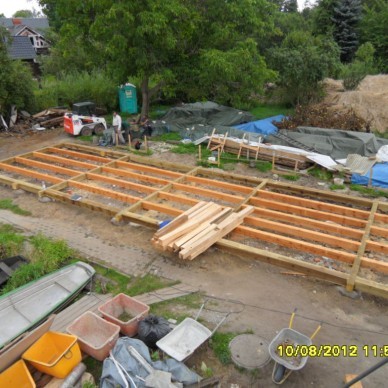
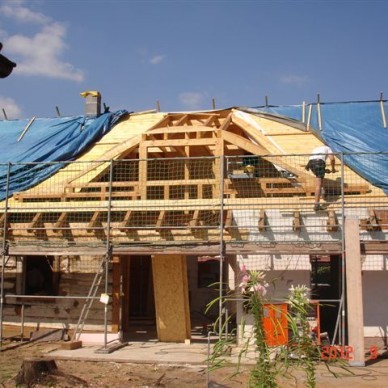
Under the supervision of the Lower Monument Conservation Authority of the Oberspreewald-Lausitz district, the works began. Planned by the Jochintke planning office, Calau; executed by the Maschen carpentry firm from Ragow (Lübbenau). The two large buildings were completely dismantled and given new foundations – carefully, true to the materials, with the aim of securing the historic fabric for the next generations.
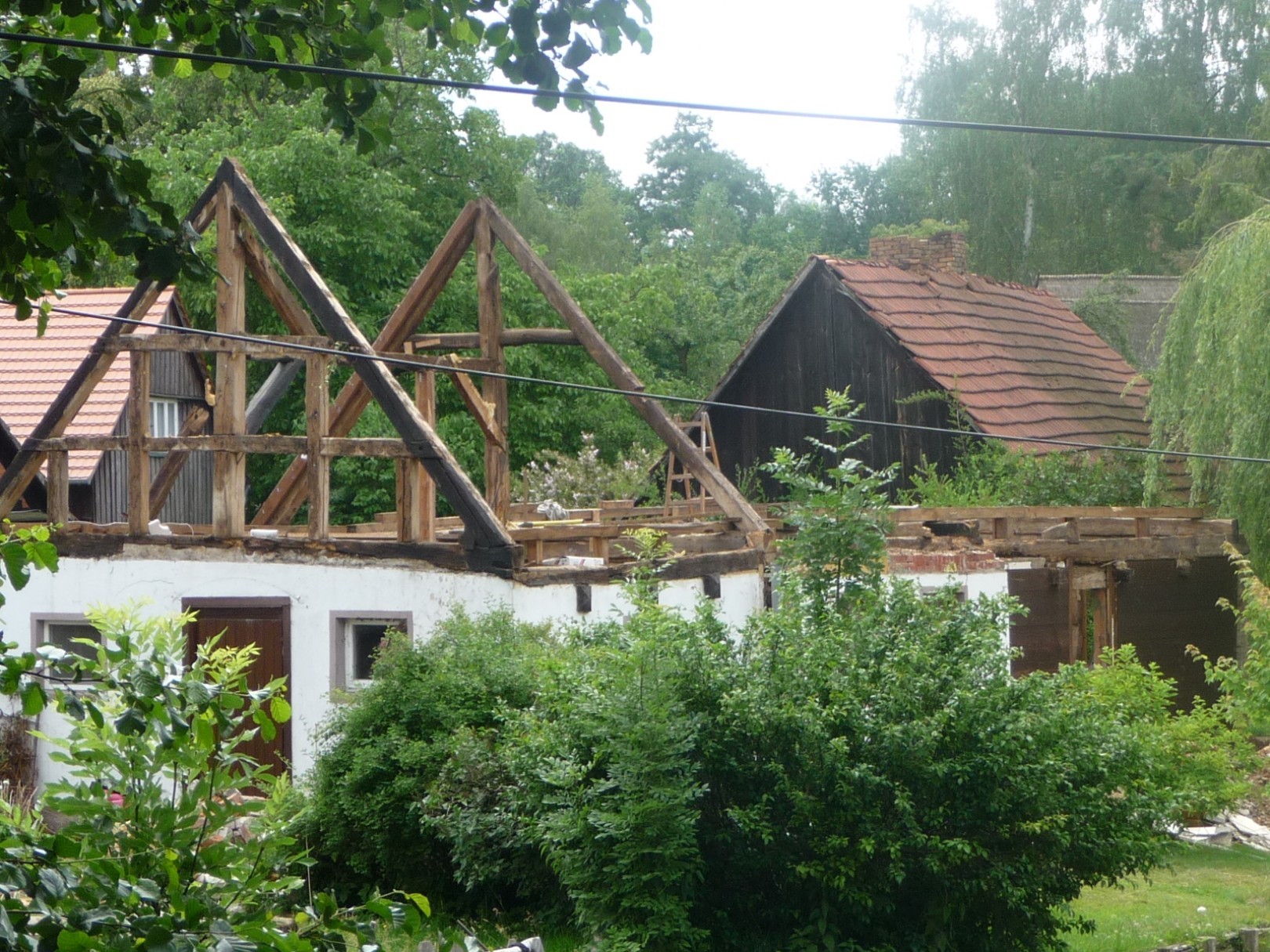
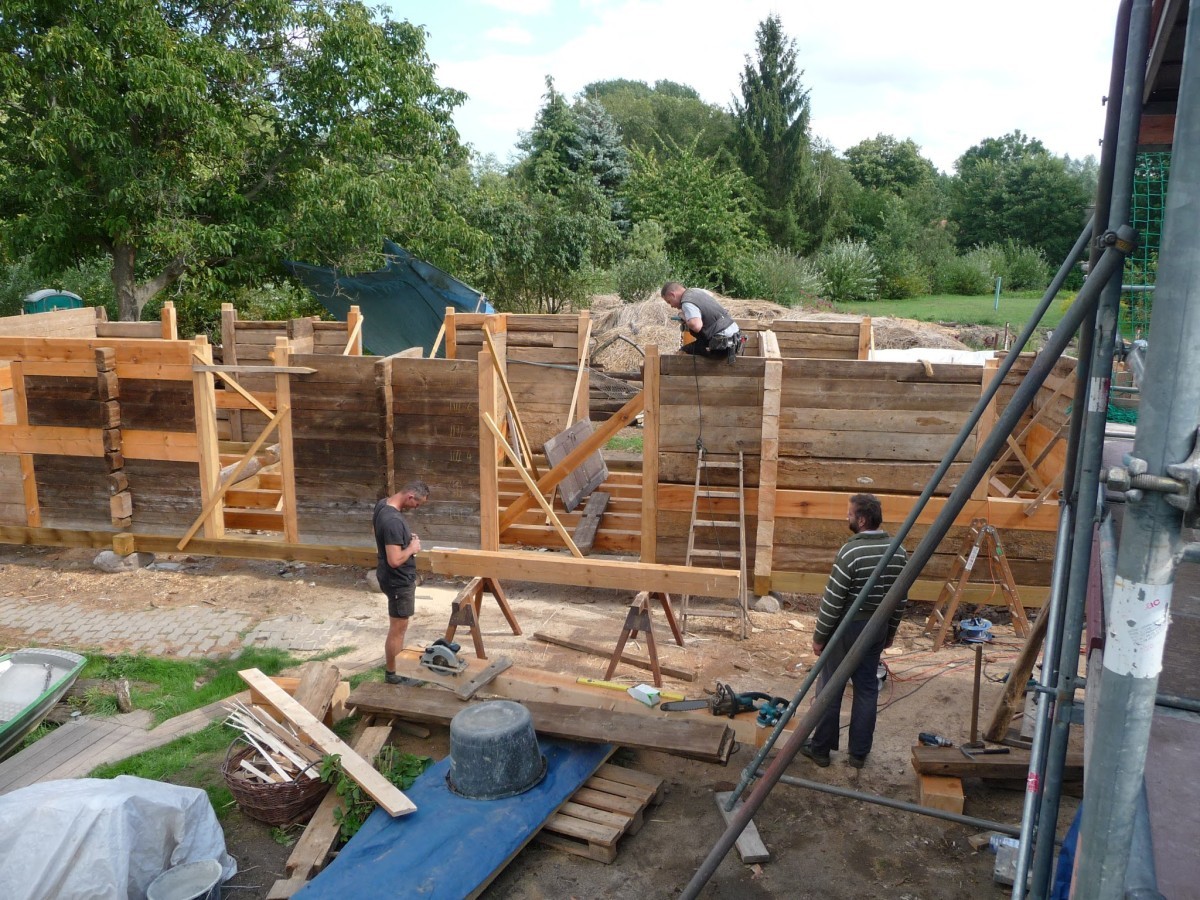
Why don't Haus anno 1750 and the barn have thatched roofs?
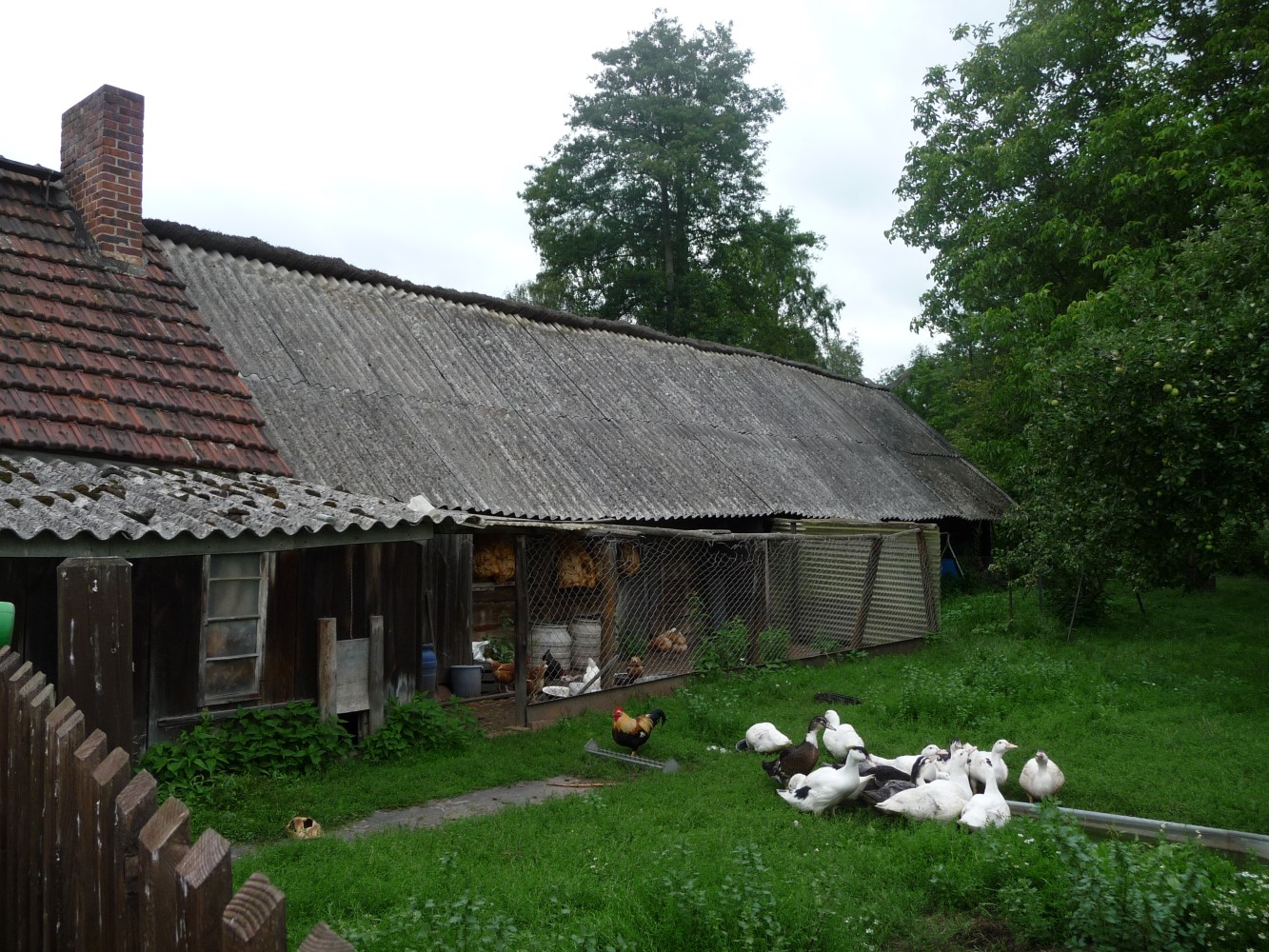
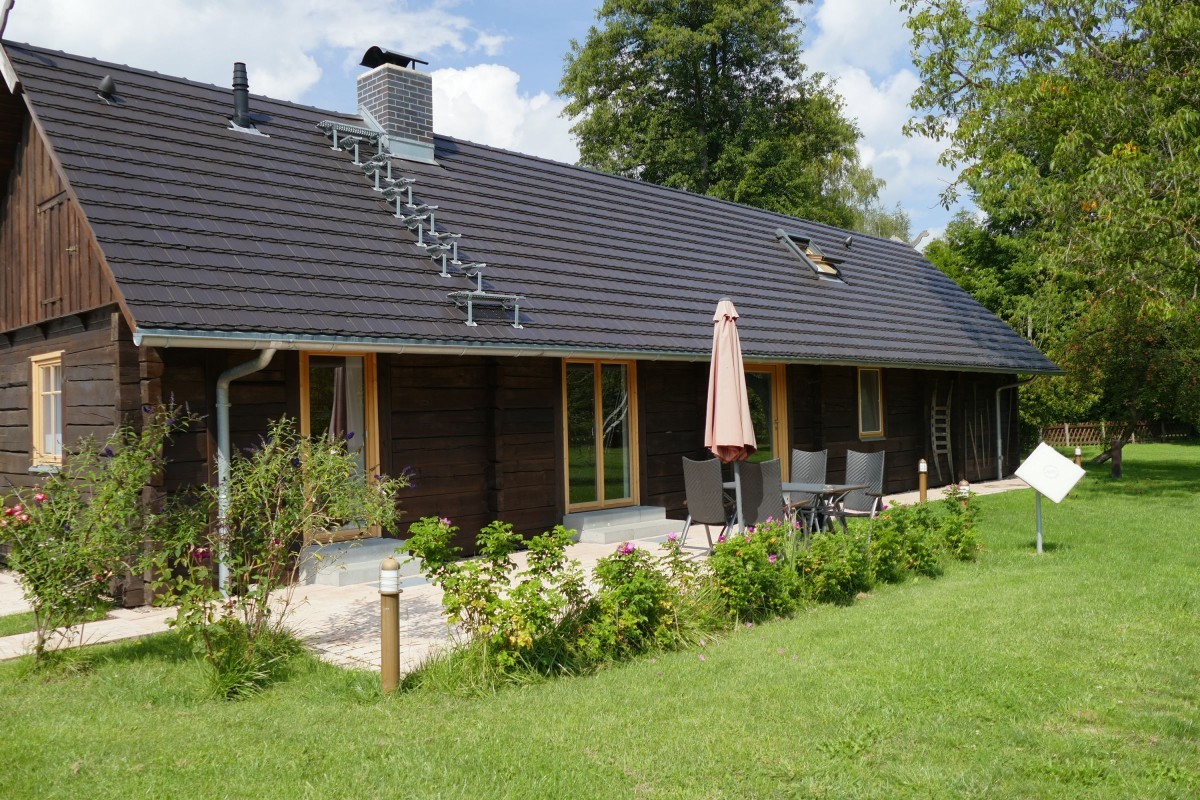
For fire safety reasons. Since the buildings stand less than 15 metres apart, the building authority prohibited a thatched covering. Thatch burns – and at this proximity a roof fire would endanger the entire ensemble. The Bienenhaus, which stands somewhat further away, was allowed to keep its thatched roof.
Financing would not have been possible without funding. The EU LEADER programme for rural development supported the project within the framework of the Integrated Rural Development (ILE) of the Spreewald economic region. The result was recognised by the Spreewald Association as a model project for high-quality tourism in rural areas.
In 2012, the barn and Haus anno 1750 were completed. 2014 saw the renovation of the Bienenhaus follow. In 2020, the ensemble was completed by a small outbuilding for administrative purposes.
What today welcomes guests as Ferien am Fließ is the result of this work: a place that carries its history.
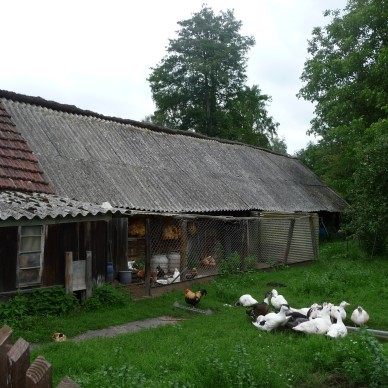
Further impressions of the renovation
-
1751Initial development
The plot is developed
The residential building – the later Haus anno 1750 – is built in the log and masonry construction typical of the Spreewald on the island plot An der Dolzke in Lehde.
-
1804/05Scheune
The Scheune – timbers from the Napoleonic era
The barn is built in traditional log construction. Dendrochronology dates the sill timbers to winter 1804/05. On the north gable: crossed bargeboards (Schlangenköpfe) as protection against evil spirits.
-
1909 – 1921Art
Peder Mørk Mønsted paints in Lehde
The Danish landscape painter Mønsted (1859–1941) paints Going to Market (1911) featuring the plot at An der Dolzke. Bruno Moras also captures the ensemble.
-
1930er – 1993Postcards
19 postcards – East and West
The ensemble appears on postcards from at least 10 publishers. First attested card: Hermann Striemann, Cottbus, 1934.
-
1970erBienenhaus
The Bienenhaus is built
A third building is erected using a prefabricated kit called "Bienenhaus". It later receives a thatched roof.
-
1982Puzzle
Ravensburger puzzle art. no. 6255680
The plot appears as a Ravensburger puzzle "In the Spreewald" – confirmed by the Ravensburg company archive.
-
2011Monument protection
Entry as a listed building
The barn is entered as a listed monument in the monument list of the state of Brandenburg. Haus anno 1750 as part of the Lehde monument zone.
-
2012 – 2014Renovation · EU LEADER
Complete dismantling and rebuilding
Jochintke planning office (Calau) and Maschen carpentry firm (Ragow) renovate all three houses – true to monument standards, with EU LEADER funding.
-
2013DTV award
5 stars
The German Tourism Association (DTV) awards Haus anno 1750 5 stars. Ferien am Fließ opens.
-
2020Extension
Ensemble completed
A small outbuilding completes the ensemble. The plot An der Dolzke is today a holiday complex with three houses for up to 12 people.
-
2026Trademark
»Ferien am Fließ« – registered trademark
On 21 May 2026, the DPMA registers »Ferien am Fließ« as a trademark – no. 30 2026 223 815. Proprietor: Achim Schöbel, Leipzig.
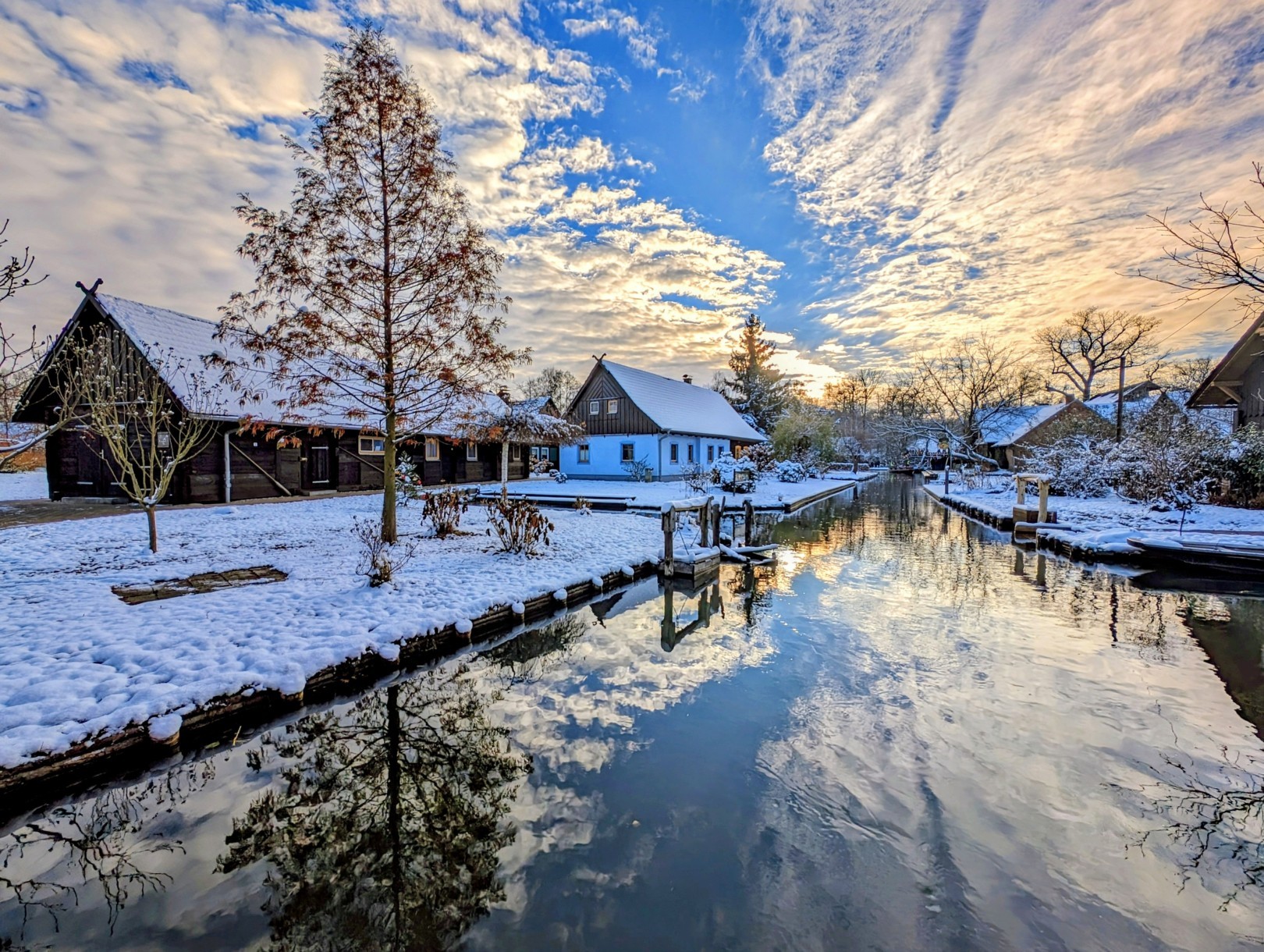
The plot An der Dolzke 11a is today a holiday complex with three houses for up to 12 people – on a small island in the Spreewald Biosphere Reserve, surrounded by waterways, without through traffic, with its own harbour.
The barn, the listed monument, is the most extraordinary of the three houses: log walls, fireplace, sauna, 1.50 metres to your own harbour. Here you sleep in a building that was carpentered in 1804 and that the state of Brandenburg considers significant enough to protect.
Some guests don't care about that. For others, that is exactly the reason why they come.
-
1750 Initial development
-
3 artistic paintings
-
19+ postcards, 10+ publishers
-
Ravensburger puzzle in 1982
-
1804/05 Dendrochronology barn
-
5 stars from the DTV in 2013 for Haus anno 1750
-
Registered trademark since 2026
-
up to 12 people in 3 houses
When was the plot first built on?
The plot An der Dolzke 11A has been built on since 1750 – initially with the combined dwelling/stable building, today's Haus anno 1750. According to dendrochronological findings, the barn was erected in the winter of 1804/05 – the timbers were felled as Napoleon was reorganising Europe.
Which famous painter painted the plot?
The Danish landscape painter Peder Mørk Mønsted (1859–1941) painted Going to Market (1911) featuring the plot An der Dolzke. Bruno Moras (1883–1939), son of the Spreewald painter Walter Moras, also captured the estate in oils. A third painting comes from an unknown painter.
What is the story behind the Ravensburger puzzle?
In 1982 the plot appeared as a Ravensburger puzzle „In the Spreewald“, art. no. 6255680 – confirmed by the Ravensburg company archive. Anyone who got it for Christmas back then put together this plot without even knowing it.
What are the „Schlangenköpfe“ (snake heads) on the gables?
Intersecting bargeboards – colloquially called „Schlangenköpfe“ (snake heads). In the Spreewald they were traditionally considered protection against evil spirits. They are a typical element of Sorbian timber architecture and can still be seen on the buildings today.
Why do Haus anno 1750 and the barn not have thatched roofs?
For fire safety reasons. Since the buildings are less than 15 metres apart, the building authority prohibited a thatched covering. The bee house, which stands a little further away, was allowed to keep its thatched roof.
Who planned and carried out the renovation?
Planned by the Jochintke planning office in Calau, carried out by the Maschen carpentry firm from Ragow (Lübbenau). 2012–2013 for Haus anno 1750 and the barn, 2014 for the bee house – always under the supervision of the Lower Monument Conservation Authority of the Oberspreewald-Lausitz district.
When did »Ferien am Fließ« become a registered trademark?
It was filed on 29 April 2026 and registered on 21 May 2026 by the German Patent and Trademark Office (DPMA) – trademark no. 30 2026 223 815.